Apple Cider Dijon Pork

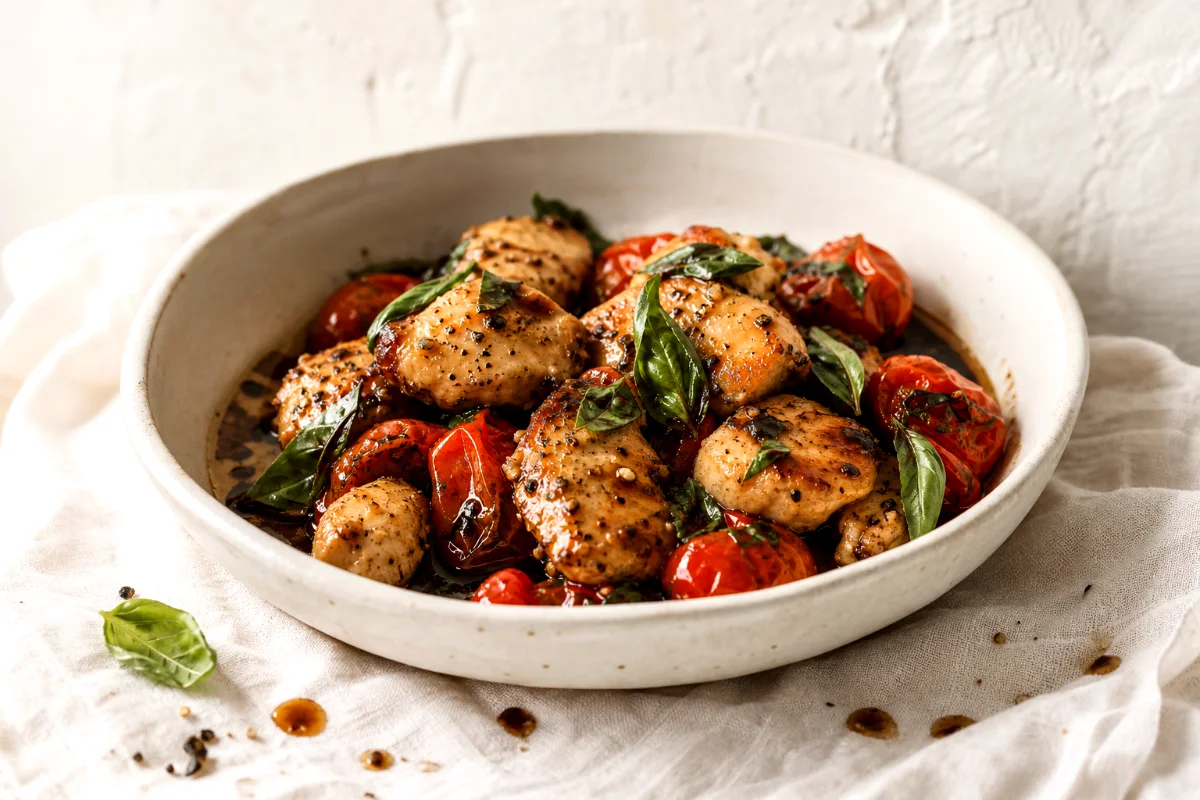
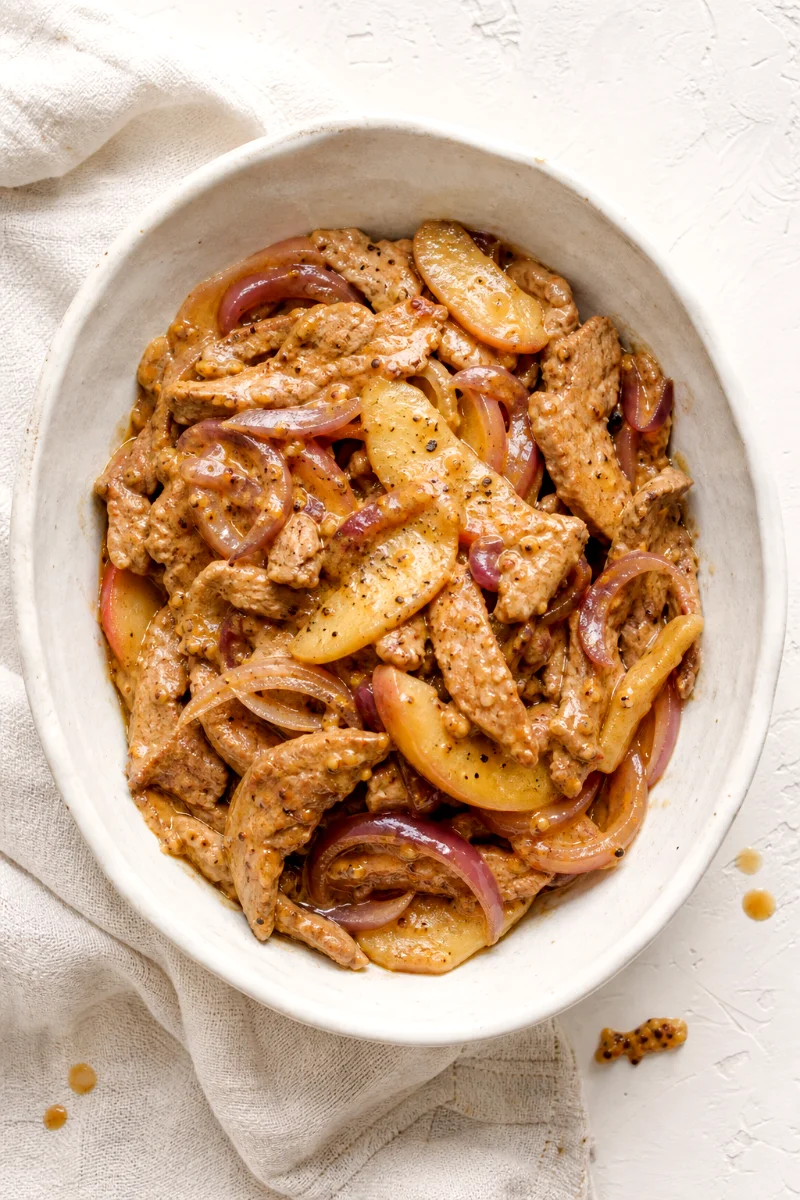
Apple Cider Dijon Pork turns simple thin pork chops, one apple, and one red onion into a cozy skillet meal with a glossy, sweet, tangy sauce.
This recipe fits a budget-friendly kitchen because it uses a small amount of pork and builds flavor with low-cost produce. The apple softens into the sauce, the onion adds sweetness, and Dijon gives the pan sauce a sharp finish that tastes bigger than the ingredient list.
Why You’ll Love This Recipe
- Fast weeknight cooking: Thin pork strips sear quickly and finish in the sauce.
- Sweet and tangy flavor: Apple cider and Dijon make a bright sauce without heavy cream.
- Tender pork with soft fruit: The pork stays juicy while the apple and onion melt into the pan.
- Simple clean up: Everything cooks in one skillet.
Fabian’s Budget Tip: Buy thin pork chops when they go on sale, then slice them into strips at home. You can also use one large apple that is a little soft, since it will cook down into the sauce and still bring great flavor.
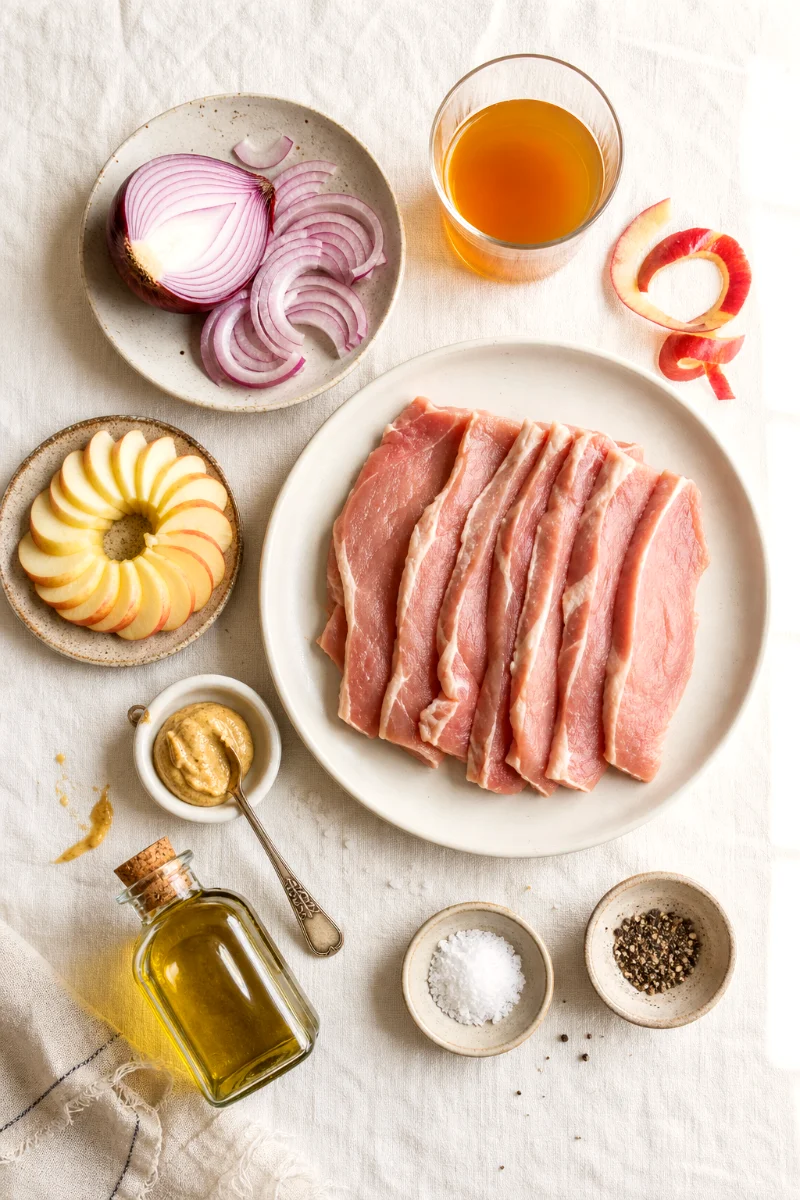
Ingredients (Serves 4)
- 1 pound (454 g) thin pork chops, sliced into strips
- 1 medium red onion, thinly sliced
- 1 medium apple, cored and thinly sliced
- 1/4 cup (60 ml) apple cider
- 1 tablespoon (15 g) Dijon mustard
- 1 tablespoon (15 ml) olive oil or neutral cooking oil
- 1/2 teaspoon fine salt, plus more to taste
- 1/4 teaspoon black pepper
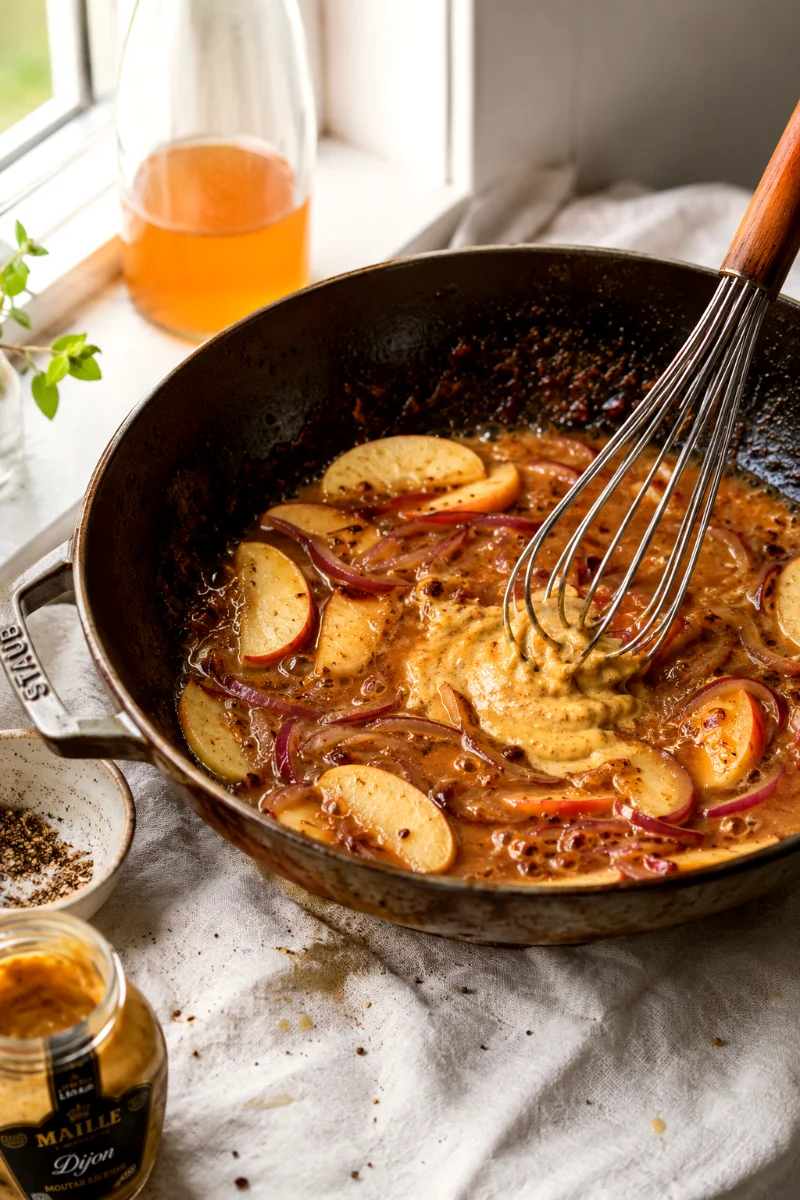
Step-by-Step Instructions
1. Season and Sear the Pork
Pat the pork strips dry with a paper towel. Season them with salt and black pepper. Heat the oil in a large skillet over medium high heat until it shimmers.
Add the pork in a single layer. Let it sear without moving it for about 2 minutes, until the edges look deeply golden and the skillet smells savory. Flip the strips and cook for 1 to 2 more minutes. Transfer the pork to a plate.
2. Soften the Onion and Apple
Add the sliced red onion and apple to the same skillet. Stir them through the browned bits on the bottom of the pan. Cook for 4 to 5 minutes, until the onion turns glossy and the apple starts to soften at the edges.
If the pan looks dry, add a small splash of water and scrape the bottom. Those browned bits bring the sauce its deep flavor.
3. Make the Apple Cider Dijon Sauce
Lower the heat to medium. Whisk the apple cider and Dijon mustard together in a small cup, then pour the mixture into the skillet.
Stir well as the sauce bubbles. It should smell bright, a little sweet, and lightly sharp from the mustard.
4. Simmer the Pork in the Sauce
Return the pork and any juices from the plate to the skillet. Toss everything so the pork gets coated in the apple cider Dijon sauce.
Simmer for 2 to 4 minutes, until the sauce thickens enough to cling to the pork and the pork is cooked through. For the best texture, stop cooking once the pork reaches 145°F 63°C in the thickest pieces.
5. Taste and Serve
Taste the sauce and adjust with a pinch of salt or a little more Dijon if you want extra tang. Serve hot with mashed potatoes, rice, egg noodles, or roasted vegetables.
Expert Troubleshooting & FAQs
Why did my pork turn tough?
Thin pork chops cook fast. If they stay in the skillet too long, they can dry out. Sear them quickly, remove them, then return them only long enough to finish in the sauce.
Can I use apple juice instead of apple cider?
Yes. Apple juice works in a pinch. Apple cider tastes a little deeper and less sweet, but apple juice will still give the sauce a nice fruit flavor.
What kind of apple works best?
Use a firm apple like Honeycrisp, Gala, Fuji, or Granny Smith. A sweet apple gives a mellow sauce. A tart apple makes the Dijon taste brighter.
Estimated Nutritional Facts Per Serving
- Calories: about 270
- Protein: about 27 g
- Carbs: about 14 g
- Fats: about 12 g
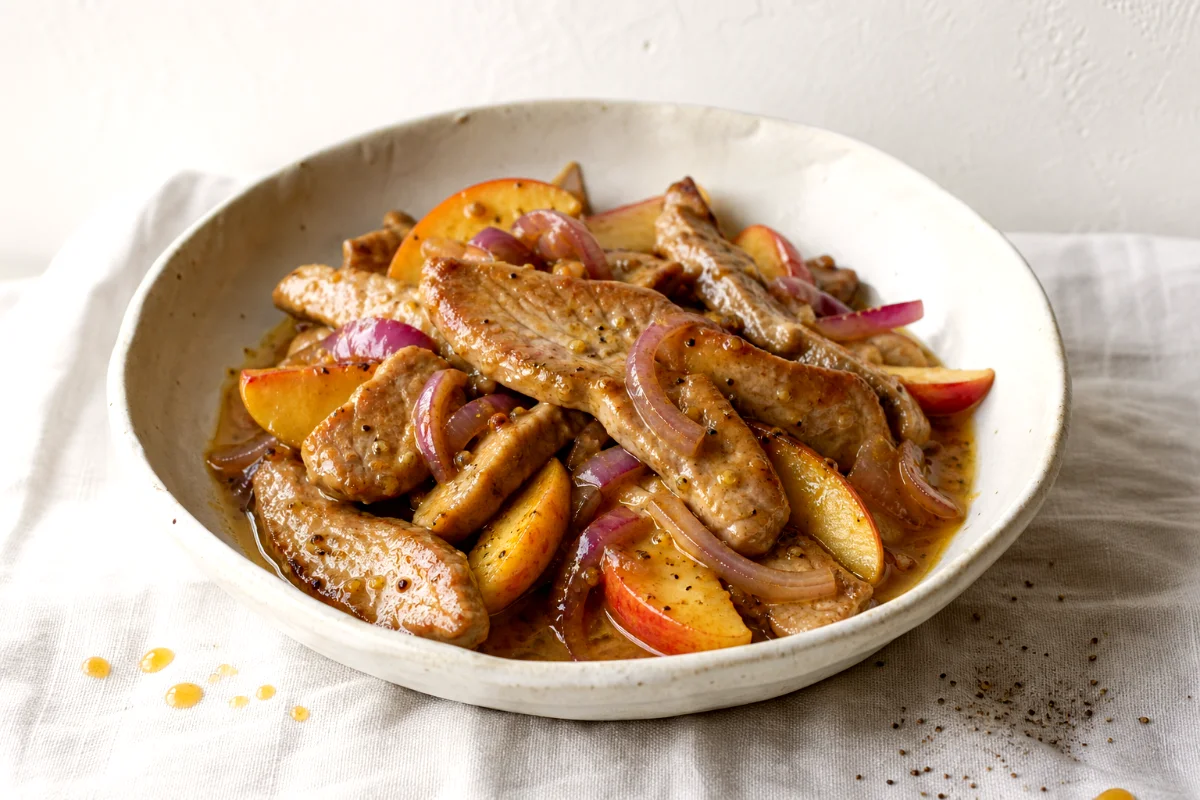
Apple Cider Dijon Pork
Ingredients
- 1 pound (454 g) thin pork chops, sliced into strips
- 1 medium red onion, thinly sliced
- 1 medium apple, cored and thinly sliced
- 1/4 cup (60 ml) apple cider
- 1 tablespoon (15 g) Dijon mustard
- 1 tablespoon (15 ml) olive oil or neutral cooking oil
- 1/2 teaspoon fine salt, plus more to taste
- 1/4 teaspoon black pepper
Instructions
- 1. Season and Sear the Pork. Pat the pork strips dry with a paper towel. Season them with salt and black pepper. Heat the oil in a large skillet over medium high heat until it shimmers. Add the pork in a single layer. Let it sear without moving it for about 2 minutes, until the edges look deeply golden and the skillet smells savory. Flip the strips and cook for 1 to 2 more minutes. Transfer the pork to a plate.
- 2. Soften the Onion and Apple. Add the sliced red onion and apple to the same skillet. Stir them through the browned bits on the bottom of the pan. Cook for 4 to 5 minutes, until the onion turns glossy and the apple starts to soften at the edges. If the pan looks dry, add a small splash of water and scrape the bottom. Those browned bits bring the sauce its deep flavor.
- 3. Make the Apple Cider Dijon Sauce. Lower the heat to medium. Whisk the apple cider and Dijon mustard together in a small cup, then pour the mixture into the skillet. Stir well as the sauce bubbles. It should smell bright, a little sweet, and lightly sharp from the mustard.
- 4. Simmer the Pork in the Sauce. Return the pork and any juices from the plate to the skillet. Toss everything so the pork gets coated in the apple cider Dijon sauce. Simmer for 2 to 4 minutes, until the sauce thickens enough to cling to the pork and the pork is cooked through. For the best texture, stop cooking once the pork reaches 145°F 63°C in the thickest pieces.
- 5. Taste and Serve. Taste the sauce and adjust with a pinch of salt or a little more Dijon if you want extra tang. Serve hot with mashed potatoes, rice, egg noodles, or roasted vegetables.