Easy Homemade Caraway Sauerkraut (Just Cabbage, Salt & Time)

Turn one humble cabbage into a jar of tangy, crunchy, probiotic-packed caraway sauerkraut for the price of a coffee. This is fermenting at its simplest. No starter cultures, no fancy crocks, no vinegar. Just cabbage, salt, a pinch of caraway, and a few days on your counter.

Cabbage is one of the cheapest vegetables in any market, which makes this recipe a true pantry-hero. A single head stretches into weeks of servings, so your cost per portion drops to pennies. On the nutrition side, the slow fermentation does real work for you.
It builds live probiotics that support gut health, preserves the cabbage’s vitamin C, and adds a good dose of vitamin K and fiber.
The caraway seeds bring a warm, slightly peppery anise note while quietly helping with digestion. Affordable, gut-friendly, and genuinely good for you. That is exactly the kind of everyday food I love to keep in my fridge.
Why You’ll Love This Recipe
- Ridiculously cheap. One cabbage and a spoon of salt deliver jars of probiotic gold.
- Zero special gear. A clean jar and your hands are all you need to start.
- Naturally gut-healthy. Wild fermentation creates billions of beneficial bacteria for free.
- Set it and forget it. Five minutes of hands-on work, then time does the rest.
Fabian’s Budget & Health Tip: Never toss the outer cabbage leaves. Save one whole, clean outer leaf and tuck it on top of your shredded cabbage inside the jar. It acts as a natural “lid” that keeps the shreds pushed down under the brine, so you waste nothing and protect your ferment from air at the same time. For an even cheaper batch, buy cabbage at the end of market day when it is often marked down.
Ingredients (Serves 2)
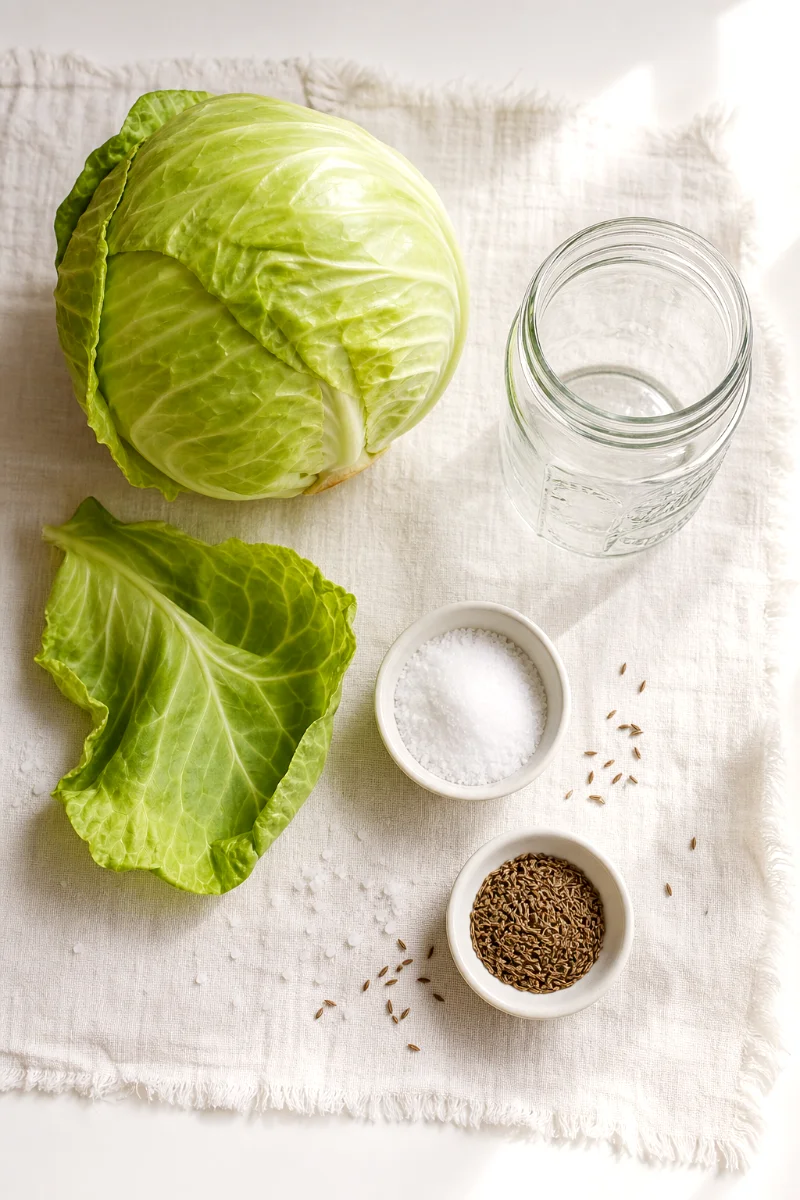
- 1 lb green cabbage, finely shredded (450 g)
- 1 1/2 tsp fine sea salt or kosher salt, non-iodized (9 g)
- 1 tsp caraway seeds (3 g)
A quick note on salt: skip table salt with iodine or anti-caking agents. They can cloud your brine and slow the good bacteria.
Step-by-Step Instructions
Shred the Cabbage 🥬
Peel off and reserve one clean outer leaf, then slice the rest into thin ribbons. Aim for long, even shreds about the width of a coin. Watch the pile grow pale green and feathery as it mounds up in your bowl. Thin shreds release brine faster, so take your time here.
Massage in the Salt 🧂
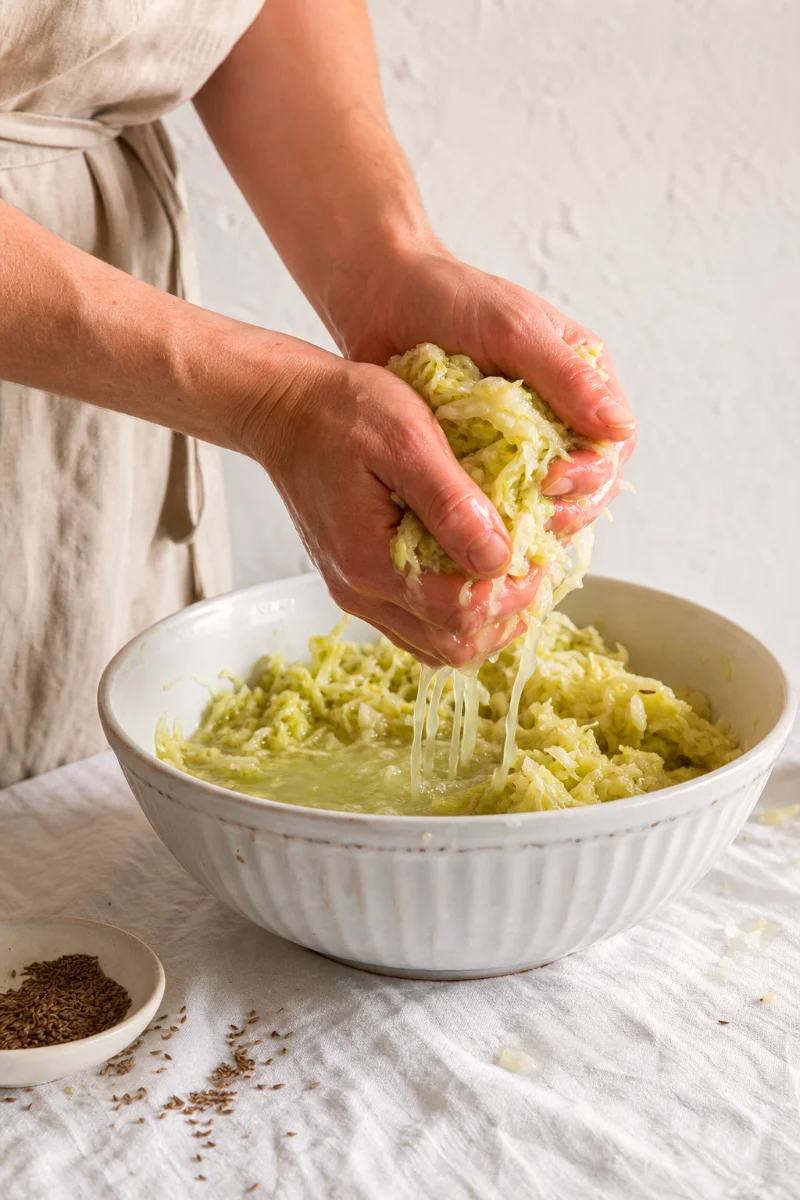
Scatter the salt over the cabbage and start squeezing and scrunching it with both hands. Listen for it. Within a minute the dry crunch turns wet and squeaky. Keep working for 3 to 5 minutes until the cabbage looks glossy, wilts down to half its size, and a pool of cloudy brine collects at the bottom of the bowl. When you grab a handful and liquid streams between your fingers, you are there.
Add the Caraway 🌿
Sprinkle the caraway seeds over the wilted cabbage and toss to spread them evenly. Lean in for a second. You should catch that warm, nutty, faintly licorice aroma waking up. Those little seeds are about to perfume the whole jar.
Pack the Jar Tightly 🫙
Press the cabbage into a clean jar a handful at a time, pushing down firmly with your knuckles or the back of a spoon after each addition. You want to see brine rising up and over the shreds, with tiny bubbles squeezing to the surface. Keep packing until the cabbage is fully submerged and the liquid sits about one inch above it.
Cap It with the Leaf 🍃
Fold your reserved outer leaf and press it on top to hold every shred under the brine. Nothing should poke above the surface. Anything exposed to air can spoil, so this step matters. Leave at least an inch of empty space at the top of the jar for the ferment to bubble.
Ferment on the Counter ⏳
Set the jar on a small plate to catch any overflow and tuck it somewhere out of direct sun, around room temperature. Loosely rest the lid on top or cover with a cloth so gases can escape. Over the next few days you will see steady bubbling and smell that bright, sour tang building.
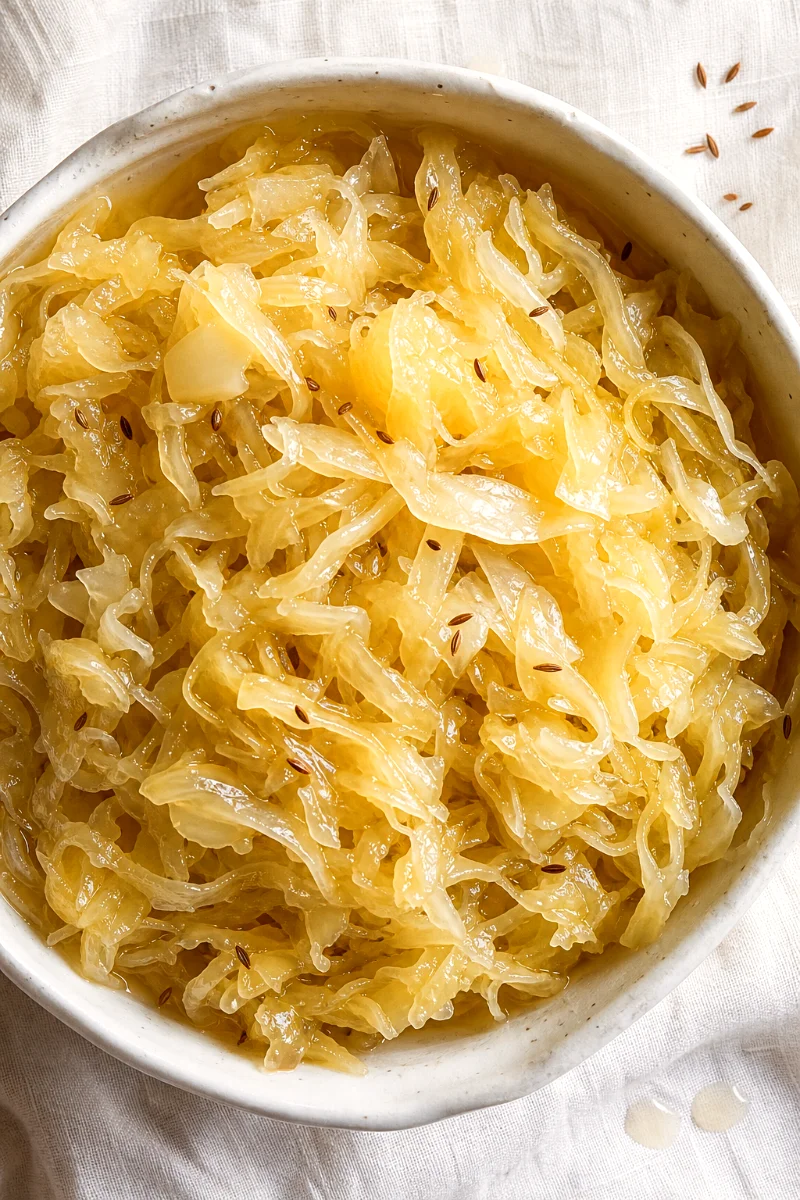
Press the cabbage back down once a day. Start tasting on day 5. When it is pleasantly sour and still crunchy, usually between 5 and 7 days, it is ready. Seal it tightly and move it to the fridge to slow things right down.
Expert Troubleshooting & FAQs
What if my cabbage didn’t release enough brine to cover it?
This happens with older, drier cabbage. Mix 1 cup of water with 1 teaspoon of salt until dissolved, then pour just enough over the top to submerge the shreds. Keeping everything under liquid is the single most important rule.
There’s a white film on top. Is it mold?
A thin, flat, white film is almost always kahm yeast, which is harmless. Simply skim it off and carry on. Real mold looks fuzzy and shows up in green, black, or pink patches. If you ever see fuzzy growth or smell something rotten rather than sour, play it safe and toss the batch.
How do I know when it’s fermented enough?
Trust your taste buds, not just the calendar. Cooler kitchens ferment slowly and warmer ones speed it up. Start tasting on day 5. You are looking for a clean, sour, tangy bite with a satisfying crunch. Once you love the flavor, refrigerate it to lock it in.
Estimated Nutritional Facts
Per serving (recipe makes 2 servings):
- Calories: 35
- Protein: 2 g
- Carbs: 8 g
- Fats: 0 g
Values are rough estimates. Most of the salt stays in the brine, but sauerkraut is naturally high in sodium, so factor that in if you are watching your intake.