Easy Greek Village Bread (Horiatiko Psomi)

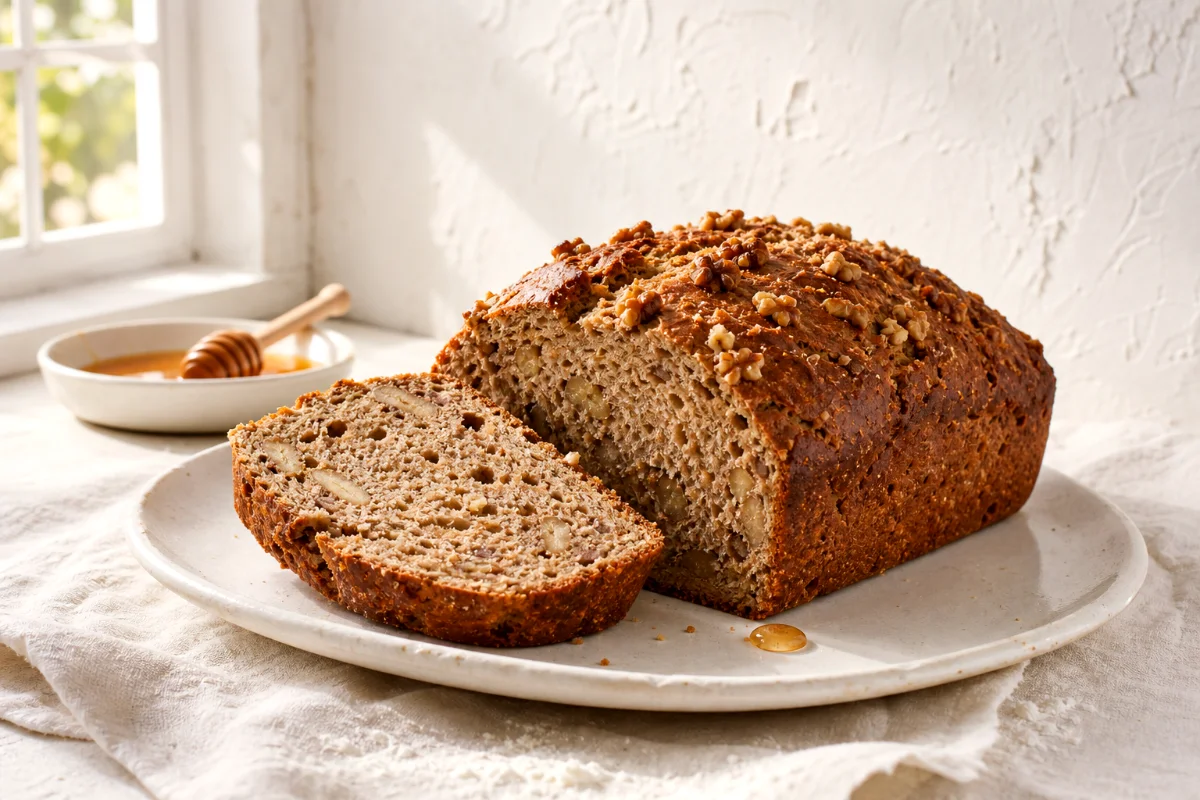
Crackly golden crust, a soft and chewy crumb, and just five pantry staples. That is all it takes to bake Greek village bread (Horiatiko Psomi) at home. This is rustic Mediterranean baking at its most honest, the kind of loaf families have pulled from wood ovens for generations, and it costs you next to nothing to make.
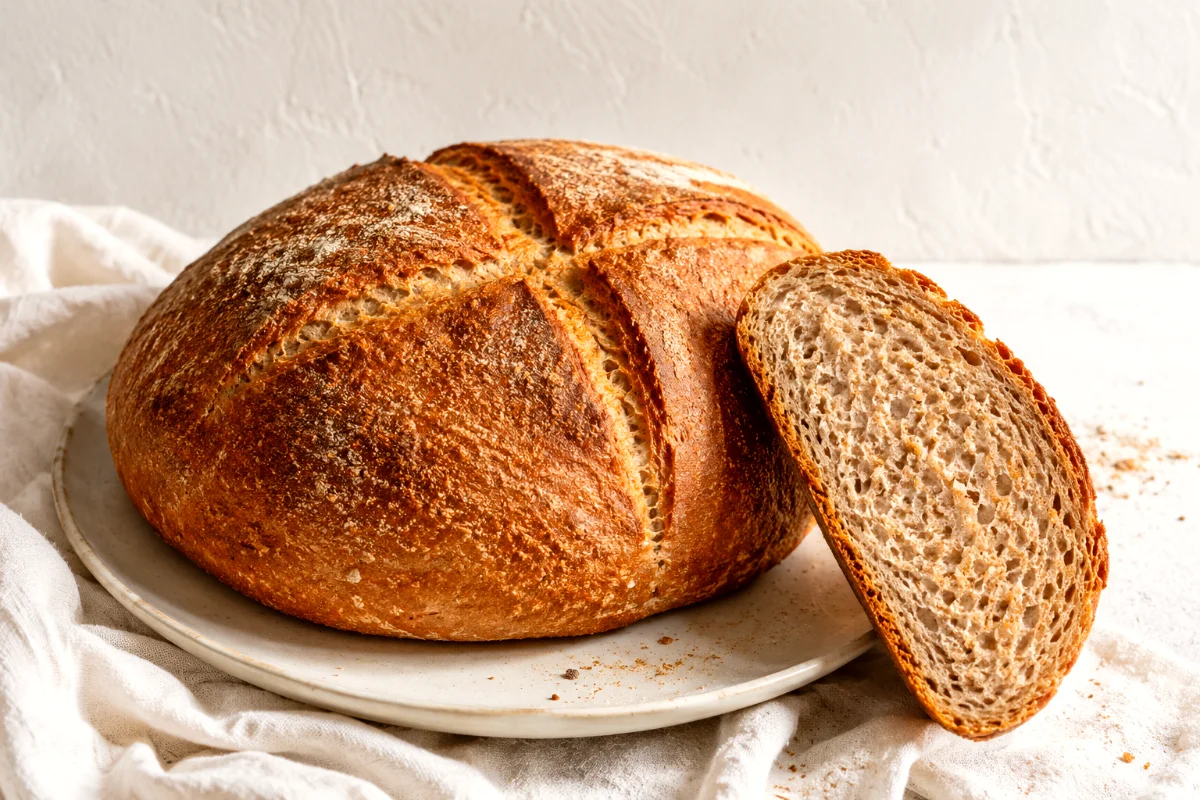
Here is why this whole wheat village loaf fits the way we cook. Flour, water, yeast, salt, and olive oil are the cheapest staples in your kitchen, so a full loaf lands well under the price of a single bakery one.
The whole wheat flour packs in fiber and slow-burning carbs that keep you full longer, while the olive oil brings those heart-healthy Mediterranean fats we love. You get a real, nourishing loaf with zero preservatives and zero fuss.
Why You’ll Love This Recipe
- It is genuinely cheap. Five basic pantry items turn into a big, rustic loaf for pocket change.
- It is hands-off. The dough does most of the work while it rises. You just show up to shape and bake.
- It is wholesome. Half whole wheat flour means more fiber and a deeper, nuttier flavor than plain white bread.
- No special gear needed. A bowl, a spoon, and your two hands are all you need. No machine required.
Fabian’s Budget & Health Tip: Skip the little yeast packets. A jar of active dry yeast costs a fraction per use and lasts for months in the fridge, so your cost per loaf drops fast. Want even more fiber for the same money? Swap half a cup of the white flour for extra whole wheat. The crumb stays soft and you sneak in more nutrients without spending a cent more.
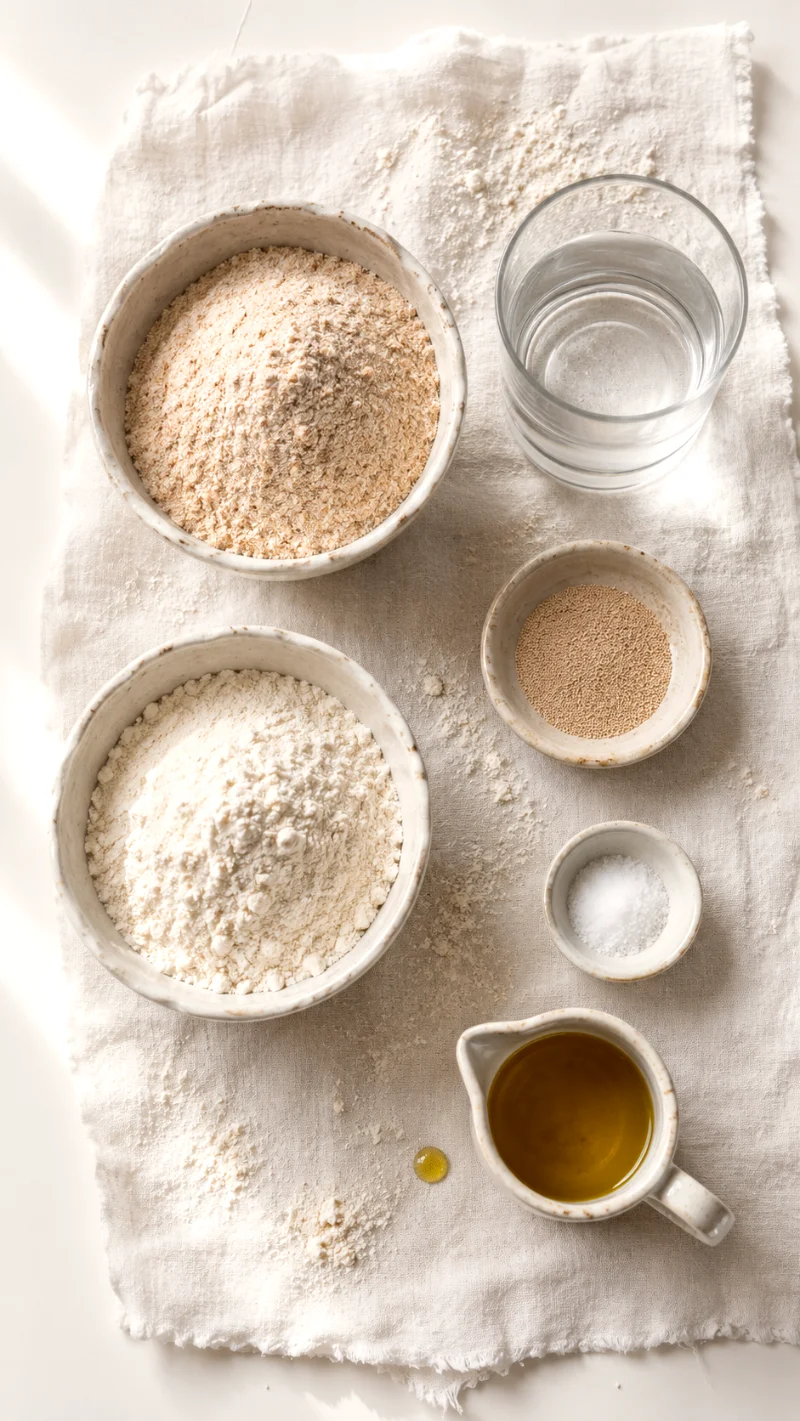
Ingredients (Serves 2)
Yields one loaf, about 10 slices.
- 2 cups (240g) whole wheat flour
- 2 cups (240g) all-purpose white flour
- 1 1/2 cups (360ml) warm water
- 2 tsp (7g) active dry yeast
- 2 tsp (12g) fine salt
- 2 tbsp (30ml) olive oil
Step-by-Step Instructions
Mix the Dough 🥣
Whisk the whole wheat flour, white flour, yeast, and salt together in a large bowl. Pour in the warm water and olive oil. Stir with a sturdy spoon until everything clumps into a rough, shaggy ball and no dry flour is left at the bottom. The dough will look messy and lumpy here, and that is exactly right.
Knead Until Smooth 💪
Turn the dough onto a lightly floured counter and knead for 10 minutes. Push it away with the heel of your hand, fold it back, and turn. Watch it transform from sticky and patchy into a smooth, elastic ball that springs back when you press it. It should feel soft and just slightly tacky, like the inside of your wrist.
Let It Rise ⏳
Place the dough in a lightly oiled bowl and cover it with a clean towel. Set it in a warm, draft-free spot for about 1.5 hours. You are waiting for it to double in size, puff into a smooth dome, and show a few tiny bubbles peeking through the surface.
Shape the Loaf 🔵
Press the dough down gently. You will hear a soft hiss as the trapped air escapes. Fold the edges into the center, flip it seam-side down, and cup your hands around it to pull it into a tight round ball. Set it on a parchment-lined tray.
Second Rise 🌾
Cover the round loaf again and let it rest for 45 minutes. It is ready when it looks swollen and pillowy, and a gentle poke springs back slowly, leaving a faint dimple.
Score the Top 🔪
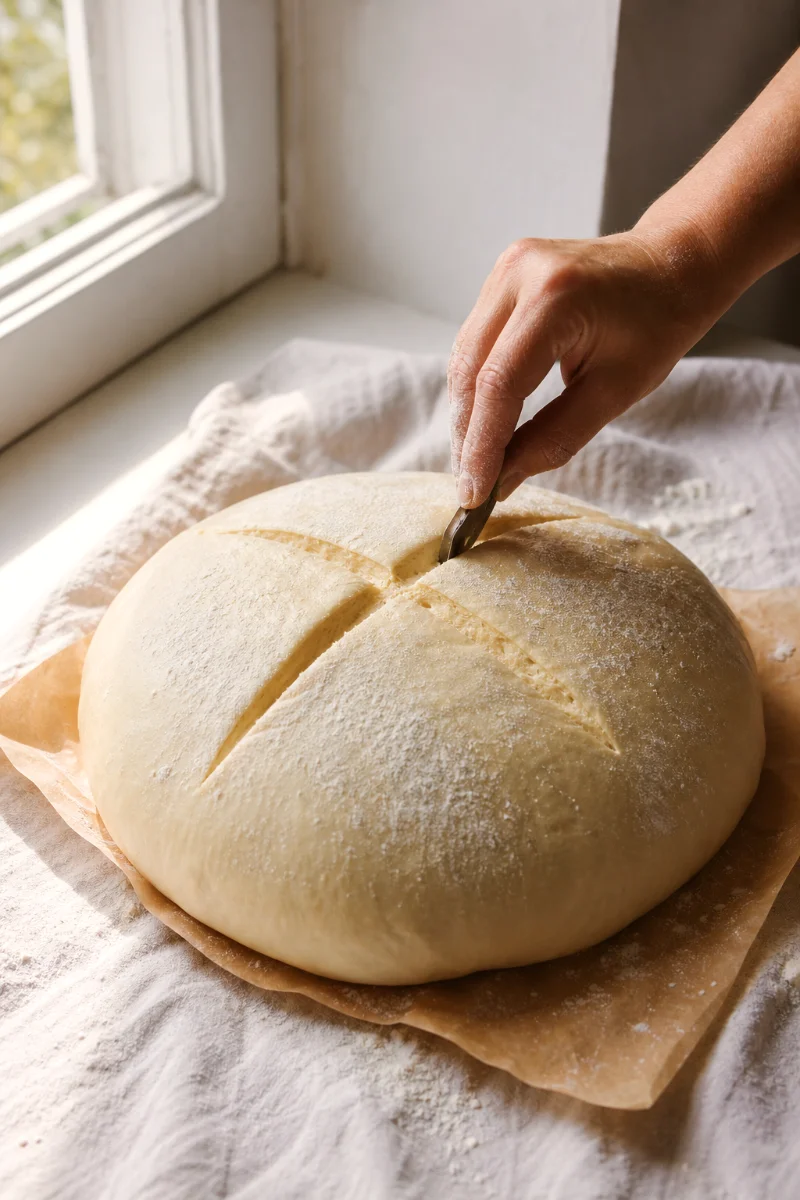
With a sharp knife or blade, slash a shallow cross or X about half an inch deep across the top. The taut skin will spread open slightly as the blade glides through. This is your shot of the loaf, so make the cuts confident and clean.
Bake Until Hollow 🔥
Slide the loaf into an oven preheated to 425°F (220°C) and bake for 35 to 40 minutes. The crust turns a deep golden brown, your kitchen fills with that warm, nutty bakery smell, and the bottom sounds hollow like a drum when you tap it. That hollow knock is your signal it is done.
Cool and Crackle 🧺
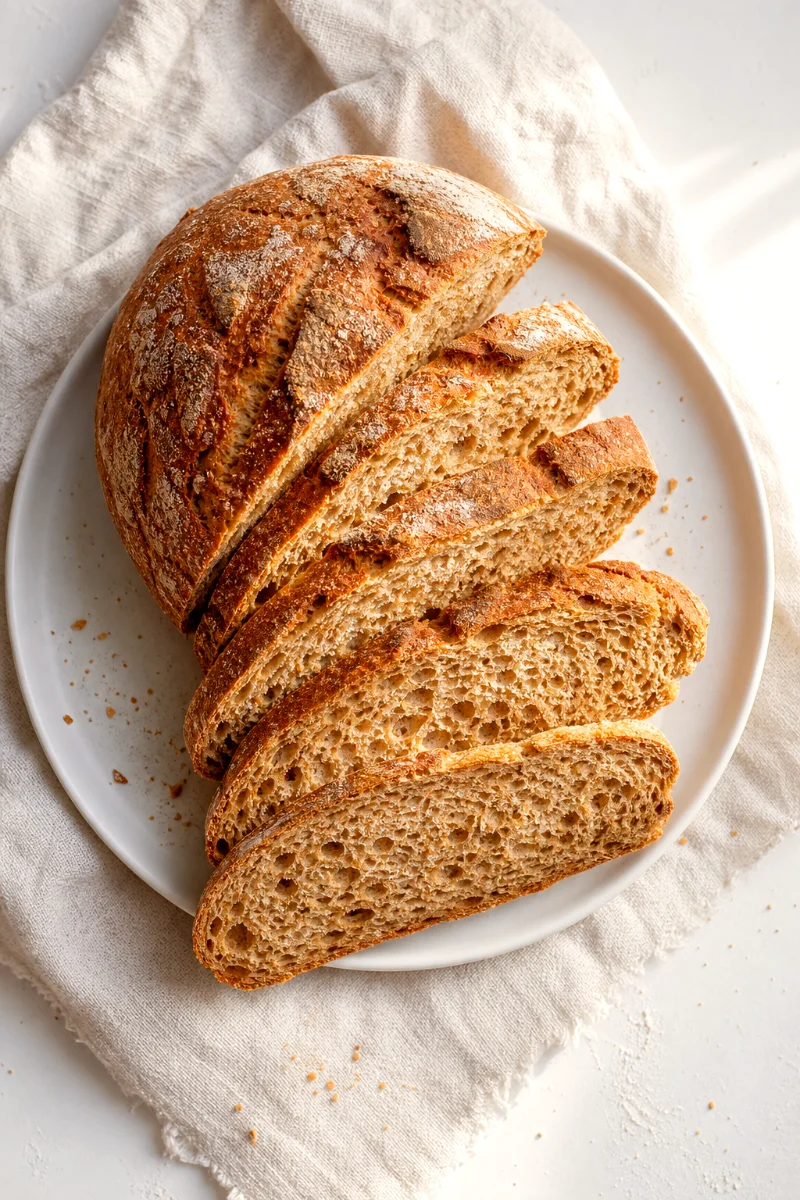
Move the loaf to a wire rack and let it cool for at least 20 to 30 minutes before slicing. Lean in close and you will hear the crust crackle and sing as the steam settles. Slicing too early will leave the inside gummy, so give it that little wait.
Expert Troubleshooting & FAQs
What if my dough is too sticky to knead?
Add flour one tablespoon at a time, kneading it in fully before adding more. The dough should feel tacky but should not coat your fingers in goo. Resist dumping in big handfuls, since too much flour gives you a dense, dry loaf.
Why didn’t my bread rise?
Your yeast was likely old or your water was too hot. Water that feels hot to the touch kills yeast on contact. Aim for warm bath water temperature, around 100°F (38°C). If your kitchen is cold, set the bowl near a warm oven or a sunny window to help it along.
How do I get an even crispier crust?
Place a small oven-safe dish of water on the bottom rack while the loaf bakes. The steam keeps the crust soft early so it can expand, then crisps it beautifully as the water cooks off. A hot oven and the full bake time matter too, so do not pull it early.
Estimated Nutritional Facts
Per serving (1 slice, based on 10 slices per loaf):
- Calories: ~195
- Protein: ~6g
- Carbs: ~36g
- Fats: ~3g
Easy Greek Village Bread (Horiatiko Psomi)
Ingredients
- 2 cups (240g) whole wheat flour
- 2 cups (240g) all-purpose white flour
- 1 1/2 cups (360ml) warm water
- 2 tsp (7g) active dry yeast
- 2 tsp (12g) fine salt
- 2 tbsp (30ml) olive oil
Instructions
- Mix the Dough. Whisk the whole wheat flour, white flour, yeast, and salt together in a large bowl. Pour in the warm water and olive oil. Stir with a sturdy spoon until everything clumps into a rough, shaggy ball and no dry flour is left at the bottom. The dough will look messy and lumpy here, and that is exactly right.
- Knead Until Smooth. Turn the dough onto a lightly floured counter and knead for 10 minutes. Push it away with the heel of your hand, fold it back, and turn. Watch it transform from sticky and patchy into a smooth, elastic ball that springs back when you press it. It should feel soft and just slightly tacky, like the inside of your wrist.
- Let It Rise. Place the dough in a lightly oiled bowl and cover it with a clean towel. Set it in a warm, draft-free spot for about 1.5 hours. You are waiting for it to double in size, puff into a smooth dome, and show a few tiny bubbles peeking through the surface.
- Shape the Loaf. Press the dough down gently. You will hear a soft hiss as the trapped air escapes. Fold the edges into the center, flip it seam-side down, and cup your hands around it to pull it into a tight round ball. Set it on a parchment-lined tray.
- Second Rise. Cover the round loaf again and let it rest for 45 minutes. It is ready when it looks swollen and pillowy, and a gentle poke springs back slowly, leaving a faint dimple.
- Score the Top. With a sharp knife or blade, slash a shallow cross or X about half an inch deep across the top. The taut skin will spread open slightly as the blade glides through. This is your shot of the loaf, so make the cuts confident and clean.
- Bake Until Hollow. Slide the loaf into an oven preheated to 425°F (220°C) and bake for 35 to 40 minutes. The crust turns a deep golden brown, your kitchen fills with that warm, nutty bakery smell, and the bottom sounds hollow like a drum when you tap it. That hollow knock is your signal it is done.
- Cool and Crackle. Move the loaf to a wire rack and let it cool for at least 20 to 30 minutes before slicing. Lean in close and you will hear the crust crackle and sing as the steam settles. Slicing too early will leave the inside gummy, so give it that little wait.