Rosemary and Sea Salt Country Loaf

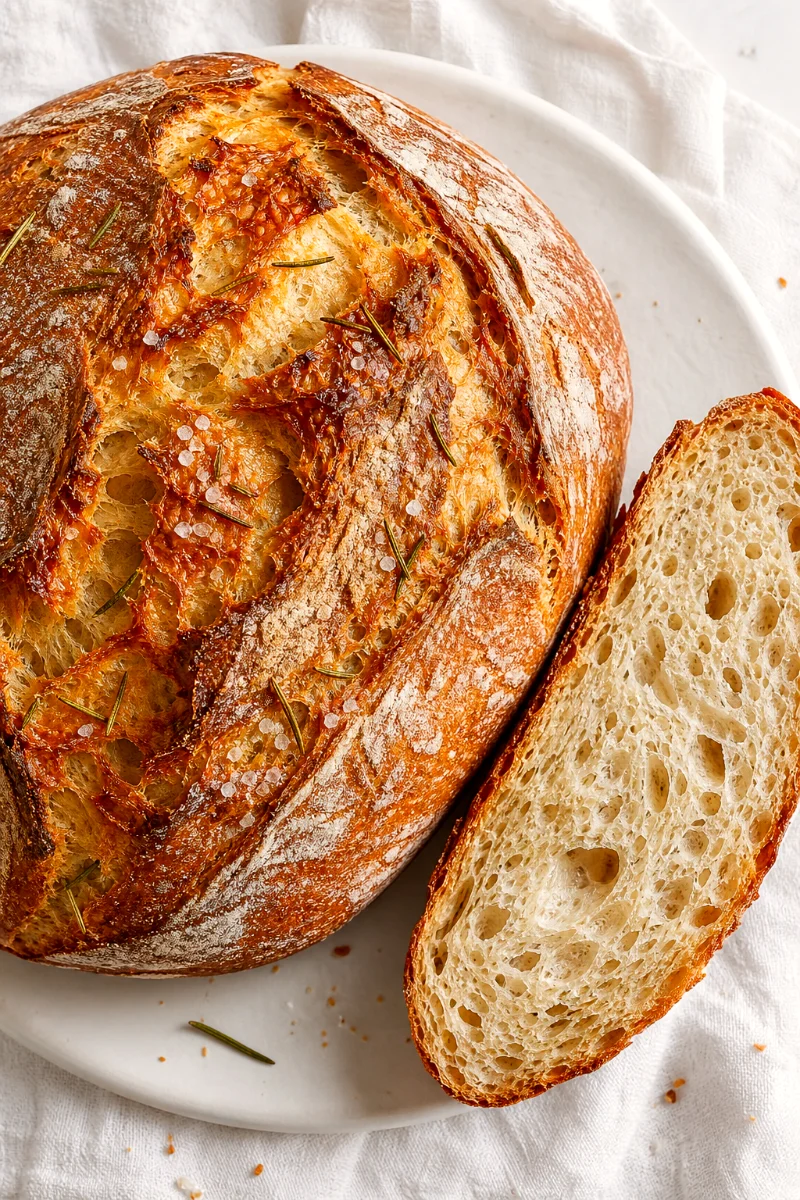
Crusty bakery bread costs a small fortune, but this rosemary and sea salt country loaf bakes up at home for about a dollar of pantry staples. You only need four things you almost certainly already own: flour, water, yeast, and salt. The rosemary and flaky sea salt do the rest, turning humble ingredients into a loaf that smells like a Mediterranean bakery.

This recipe fits the Cooking with Fabian promise perfectly. Flour, yeast, and salt are some of the cheapest ingredients in any kitchen, and a single small loaf works out far cheaper than anything from the store shelf.
On the nutrition side, you are baking real food with zero preservatives, no added sugar, and no oil. You control exactly how much salt goes in, and the rosemary brings its own antioxidant compounds along for free. Simple, honest, and wallet-friendly.
Why You’ll Love This Recipe
- Four pantry staples. No special equipment, no fancy shopping list, no mystery additives.
- That bakery crackle. A deeply golden crust that crackles when you slice it, with a soft, airy inside.
- Hands-off rising time. Ten minutes of work, then the dough does its own thing while you go live your life.
- Naturally clean eating. No oil, no sugar, no preservatives, and you decide the salt level.
Fabian’s Budget & Health Tip Buy your flour in a large bag, not a small box. The price per pound drops fast, and bread flour keeps for months in an airtight container. For a fiber boost that costs nothing extra, swap half a cup of the white flour for whole wheat. It adds a nutty depth and a little more staying power per slice. Grow rosemary on a windowsill and you will never pay for fresh herbs again.
Ingredients (Serves 2)
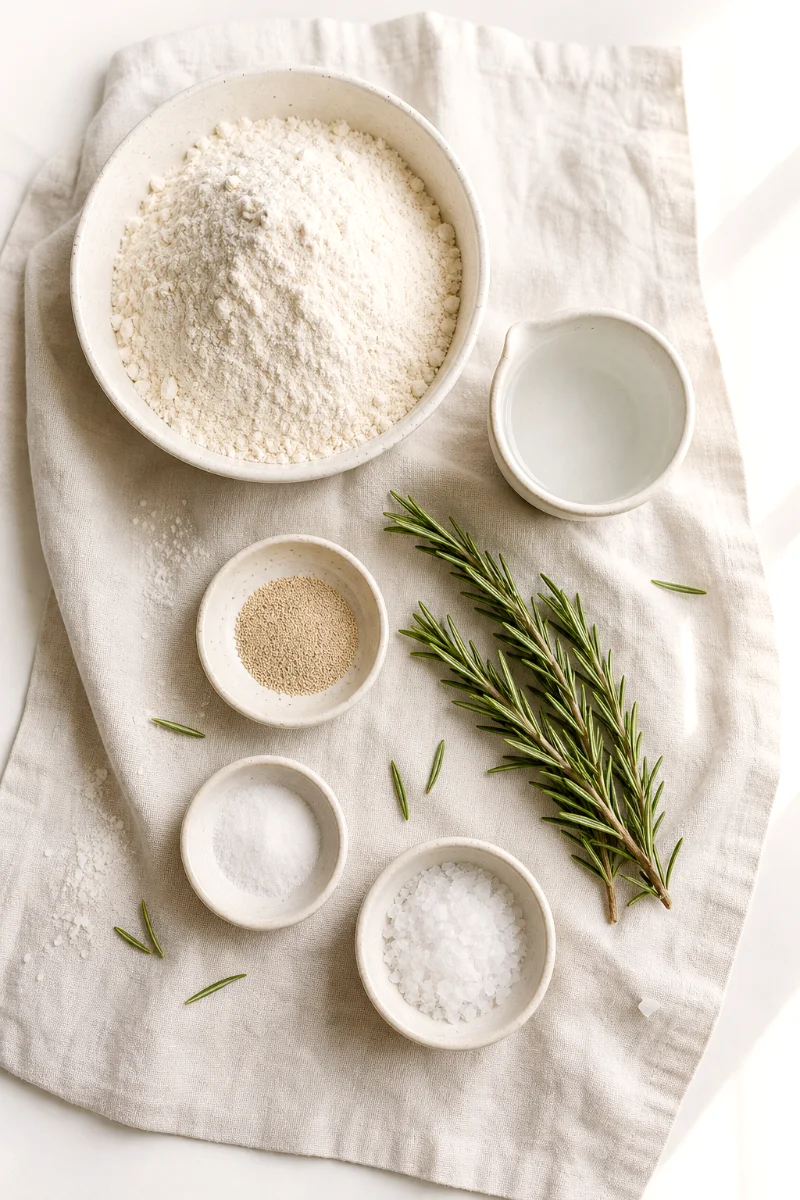
- 2 cups bread flour (250 g)
- ¾ cup warm water (180 ml)
- ½ tsp instant yeast (2 g)
- 1 tsp fine salt (6 g)
- 1 tbsp fresh rosemary, chopped (or 1 tsp dried)
- Flaky sea salt, for topping
Step-by-Step Instructions
Mix the Dough 🥣
Whisk the flour, yeast, and fine salt together in a large bowl. Pour in the warm water and stir with a wooden spoon. Keep going until no dry flour is left and you have a rough, sticky, shaggy mass clinging to the spoon. It will look messy. That is exactly right.
Knead Until Smooth 💪
Tip the dough onto a lightly floured counter and knead for 10 minutes. Push it away with the heel of your hand, fold it back, and turn. At first it tears and sticks. Then it changes. Watch for the moment the dough turns smooth and satiny, tacky but no longer gluey on your fingers. Poke it and it should spring back slowly.
First Rise ⏲️
Drop the dough into a clean, lightly oiled bowl and cover it. Let it rise for 1.5 hours in a warm spot. You want it to roughly double, doming up soft and pillowy with a gentle jiggle when you nudge the bowl.
Shape the Boule 🤲
Turn the risen dough out gently so you keep some of those air bubbles. Fold the edges into the center, flip it seam-side down, then cup your hands and drag it across the counter in small circles. You are building tension. The surface should pull taut into a smooth, tight skin over a round ball.
Second Rise 🌾
Set the boule on a sheet of parchment, cover it loosely, and rest it for 45 minutes. It is ready when it looks puffy and a light press with your fingertip leaves a dent that fills back in slowly. Meanwhile, heat your oven to 450°F (230°C).
Slash and Top ✂️🌿
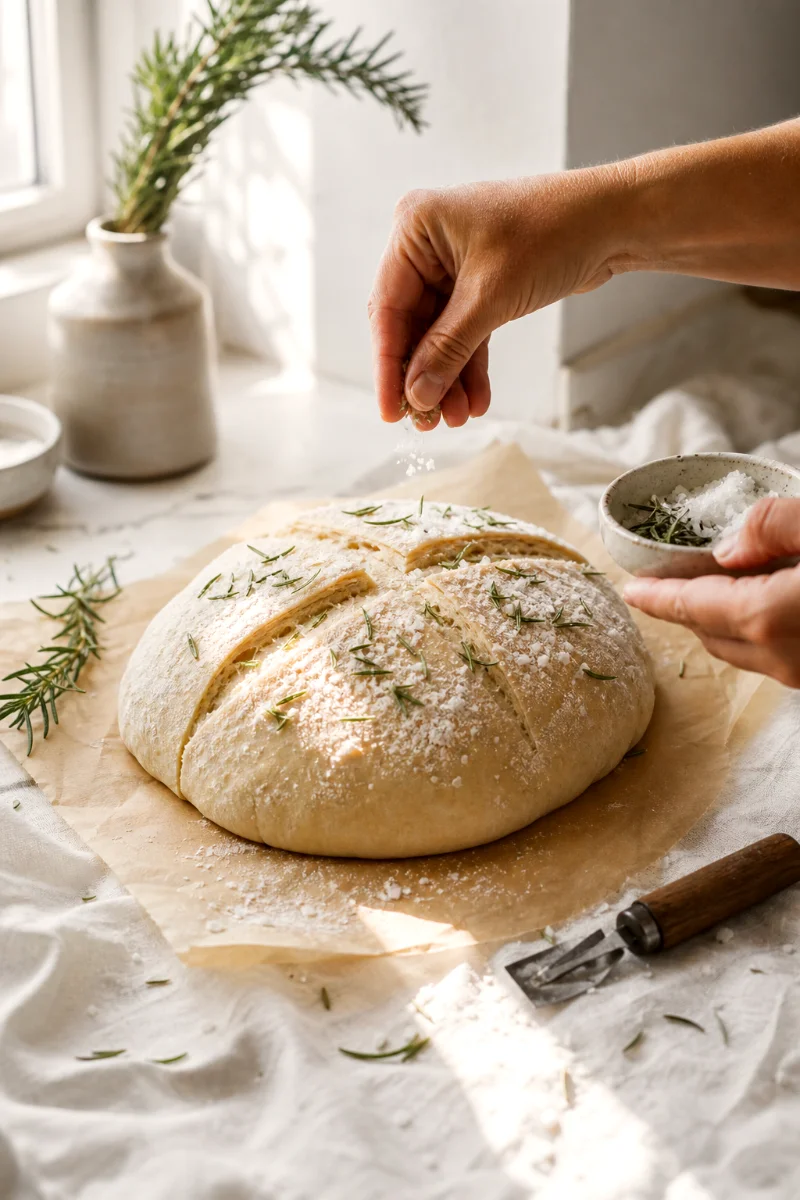
Dust the top lightly with flour. Take a sharp knife or blade and slash a confident cross or single line about half an inch deep. Scatter the chopped rosemary and a generous pinch of flaky sea salt across the surface. The herb should catch in the cuts.
Bake 🔥
Slide the loaf into the hot oven and bake for 25 to 30 minutes. About halfway, your kitchen will start to smell like warm rosemary and toasted bread. Pull it when the crust is deep golden brown and sounds hollow when you tap the bottom. For certainty, the inside should hit 200°F to 205°F (93°C to 96°C).
Cool and Listen ❄️
Move the loaf to a wire rack and let it cool fully before slicing. Lean in close, and you will hear the crust softly crackling and singing as it sets. Cutting too early lets the steam escape and leaves the crumb gummy, so be patient.
Expert Troubleshooting & FAQs
Why is my dough so sticky?
A little stickiness is normal and actually good, since it gives you that soft, open crumb. Resist the urge to dump in extra flour, which makes the loaf dense and dry. Instead, lightly flour your hands and the counter, and trust that 10 minutes of kneading will smooth it out.
What if my bread didn’t rise?
The usual culprit is yeast that is too old or water that was too hot and killed it. Your water should feel warm to the touch, never hot. Also give it time. A cold kitchen slows rising down a lot, so on chilly days let it sit longer until it has clearly doubled.
How do I get a crispier crust?
Steam is the secret. Place a small oven-safe dish of water on the bottom rack while the oven heats, or toss a few ice cubes onto the oven floor right after you load the loaf. That burst of moisture keeps the crust soft long enough to expand, then crisps it into a proper crackle.
Estimated Nutritional Facts
Per serving (half loaf), approximate:
- Calories: 450
- Protein: 13 g
- Carbohydrates: 92 g
- Fats: 2 g