Easy Focaccia Recipe with Olives, Tomatoes, and Rosemary

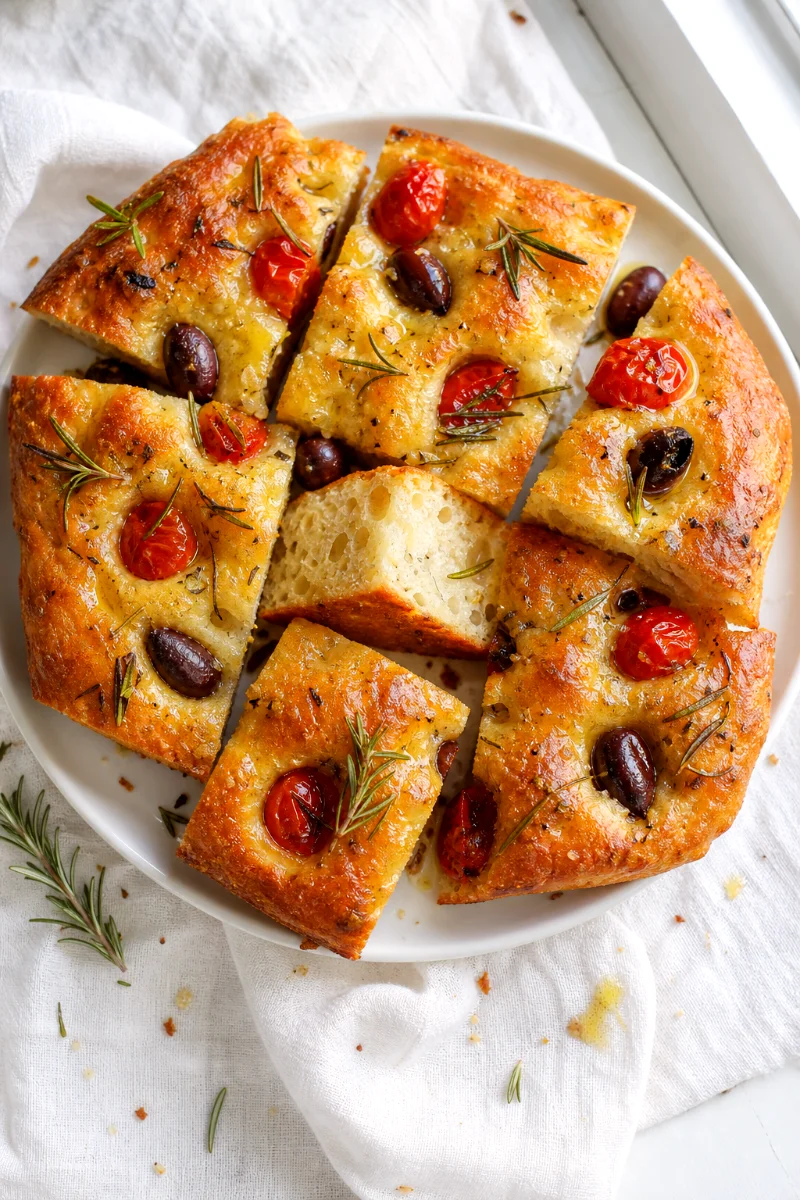
This easy focaccia recipe turns flour, yeast, water, and olive oil into a crisp, fluffy homemade bread that tastes like it came from a small bakery.
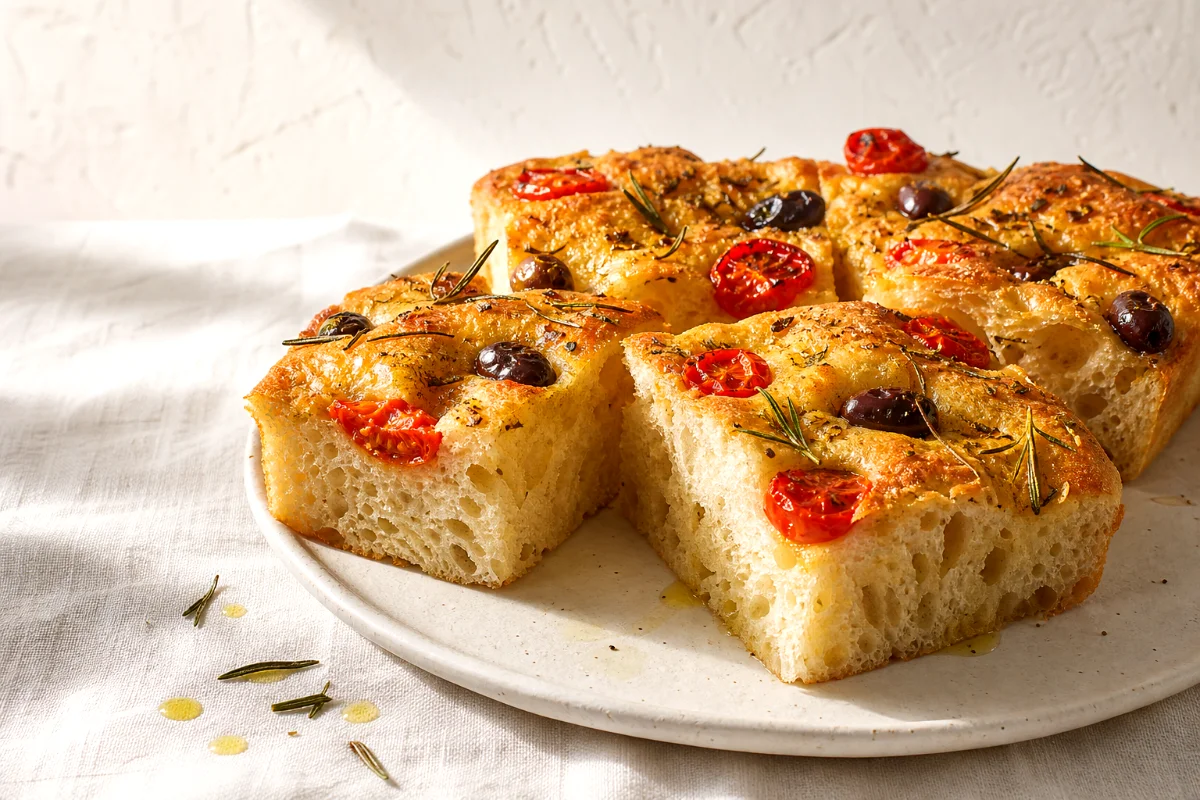
It uses budget-friendly pantry staples and a simple folding method instead of hard kneading. The dough feels soft and sticky at first, but that extra moisture gives focaccia its airy middle and golden crust.
Why You’ll Love This Recipe
- Golden, crisp edges: Olive oil in the pan helps the bottom fry slightly as it bakes.
- Soft, airy center: A wet dough and slow folds create a light texture without a mixer.
- Big flavor from simple toppings: Olives, tomatoes, and fresh rosemary add salty, juicy, herby bites.
- Easy to serve: Enjoy it warm on its own, with dips, or beside a hearty soup.
Fabian’s Budget Tip: Use what you already have for the topping. A few sliced olives, a handful of cherry tomatoes, and one rosemary sprig go a long way. If fresh rosemary costs too much, use a small pinch of dried rosemary and crush it between your fingers before sprinkling it over the dough.
Ingredients Serves 4
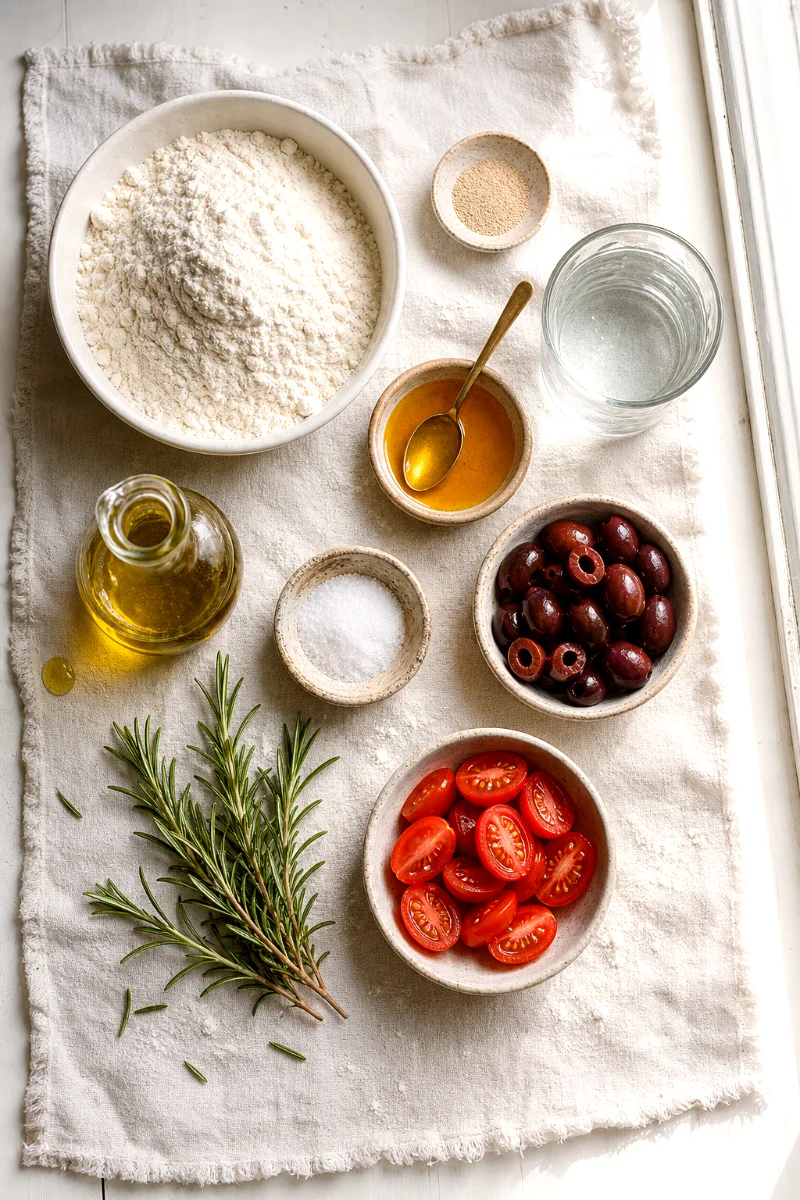
- 4 cups all-purpose flour (500 g)
- 1 1/4 teaspoons dried yeast (4 g)
- 1 teaspoon sugar or honey (5 g)
- 1 2/3 cups lukewarm water (380 to 400 ml)
- 2 tablespoons olive oil for the dough (30 ml)
- 2 teaspoons fine salt (10 g)
- 3 tablespoons extra olive oil for the pan and top (45 ml), plus more if needed
- 1/2 cup pitted olives, halved (75 g)
- 1 cup cherry tomatoes, halved (150 g)
- 2 tablespoons fresh rosemary leaves (4 g)
Step-by-Step Instructions
1. Mix the Dough
Add the flour, dried yeast, sugar or honey, salt, lukewarm water, and 2 tablespoons olive oil to a large bowl. Stir with a spoon until no dry flour remains.
The dough should look soft, shaggy, and sticky. Do not add extra flour. A sticky dough is the secret to a tender focaccia with big, airy bubbles.
2. Rest and Fold the Dough
Cover the bowl and let the dough rest at room temperature for 1 hour. After the first rest, wet your hands lightly so the dough does not stick.
Grab one side of the dough, stretch it up gently, and fold it toward the center. Turn the bowl and repeat from all four sides. The dough will feel loose at first, then smoother and stronger after each fold.
Cover the bowl again and repeat this folding process once every hour for 4 to 5 rounds. As it rests, the dough should become puffy, stretchy, and full of tiny bubbles.
3. Oil the Pan and Shape
Coat a 10 by 14-inch baking pan (25 by 35 cm) with a generous layer of olive oil. Pour the dough into the pan. Let it relax for 10 minutes if it pulls back.
Use oiled fingertips to gently press the dough toward the corners. Do not tear it. You want to keep the air inside, so press lightly and let the dough spread at its own pace.
4. Add the Toppings
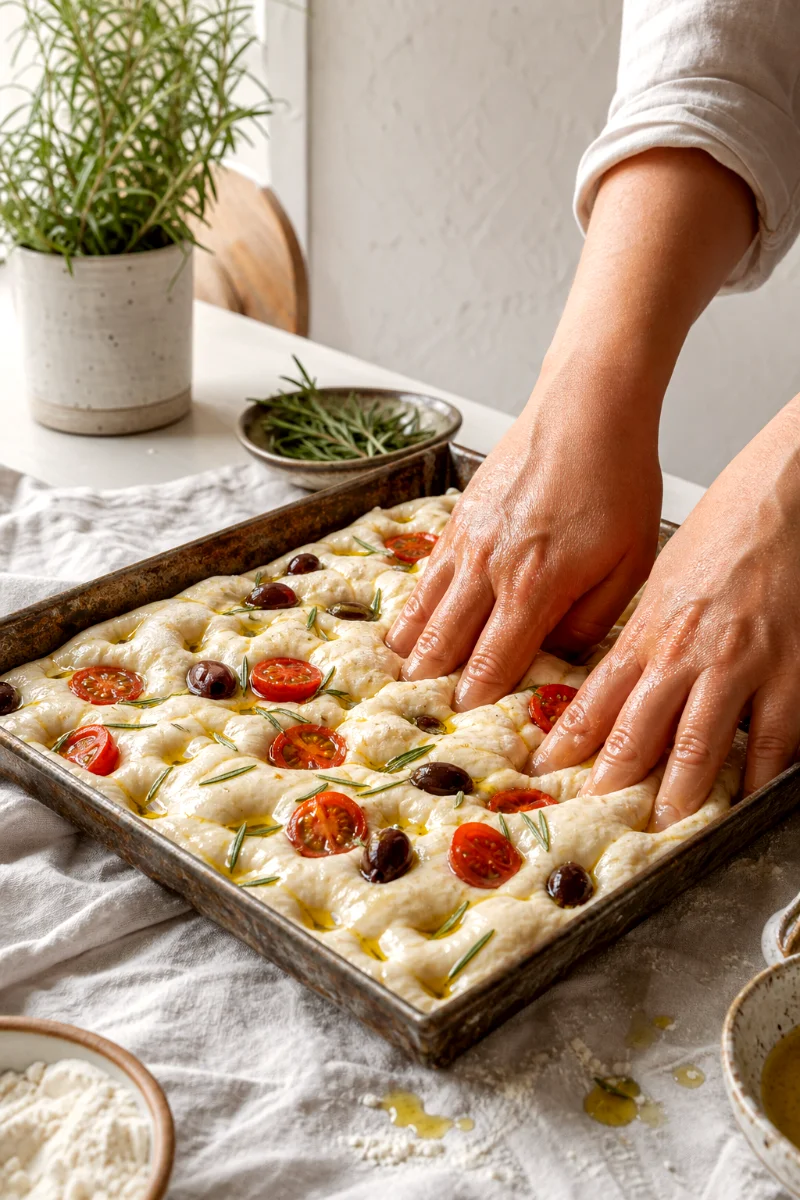
Drizzle olive oil over the top. Press your fingertips into the dough to make deep dimples. You should see little pools of oil settle on the surface.
Scatter the olives, tomatoes, and rosemary over the dough. Press the toppings in gently so they bake into the bread instead of rolling off. The tomatoes should sit cut side up or sideways so their juices roast into the crust.
5. Bake Until Golden and Crisp
Preheat the oven to 425 degrees Fahrenheit (220 degrees Celsius). Place the pan on the lower rack and bake for 20 to 22 minutes.
The focaccia is ready when the top turns golden brown, the edges look crisp, and your kitchen smells like warm olive oil and rosemary. Let it cool for 10 minutes before slicing. It tastes best warm, when the crust is still crisp and the center is soft.
Expert Troubleshooting and FAQs
Why is my focaccia dough so sticky?
Focaccia dough should be sticky because it uses more water than many basic bread doughs. That moisture helps create a fluffy center. Use wet or oiled hands instead of adding more flour.
Can I use instant yeast instead of dried yeast?
Yes. Use the same amount. Instant yeast can go straight into the flour with the other ingredients, just like the dried yeast in this recipe.
Do I need to knead the dough?
No. The hourly folds build structure without heavy kneading. Each fold traps air and strengthens the dough, so it bakes up chewy, light, and full of bubbles.
Can I make the dough ahead of time?
Yes. After mixing and one fold, cover the bowl and place it in the fridge overnight. The next day, let it sit at room temperature until puffy before shaping it in the oiled pan.
How do I know the focaccia is fully baked?
Look for a deep golden top, crisp edges, and a firm bottom. If the center still looks pale or soft, bake it for 2 to 4 more minutes and check again.
Estimated Nutritional Facts
Per serving, based on 4 servings:
- Calories: about 590
- Protein: about 16 g
- Carbs: about 95 g
- Fats: about 17 g
Easy Focaccia Recipe with Olives, Tomatoes, and Rosemary
Ingredients
- 4 cups all-purpose flour (500 g)
- 1 1/4 teaspoons dried yeast (4 g)
- 1 teaspoon sugar or honey (5 g)
- 1 2/3 cups lukewarm water (380 to 400 ml)
- 2 tablespoons olive oil for the dough (30 ml)
- 2 teaspoons fine salt (10 g)
- 3 tablespoons extra olive oil for the pan and top (45 ml), plus more if needed
- 1/2 cup pitted olives, halved (75 g)
- 1 cup cherry tomatoes, halved (150 g)
- 2 tablespoons fresh rosemary leaves (4 g)
Instructions
- 1. Mix the Dough. Add the flour, dried yeast, sugar or honey, salt, lukewarm water, and 2 tablespoons olive oil to a large bowl. Stir with a spoon until no dry flour remains. The dough should look soft, shaggy, and sticky. Do not add extra flour. A sticky dough is the secret to a tender focaccia with big, airy bubbles.
- 2. Rest and Fold the Dough. Cover the bowl and let the dough rest at room temperature for 1 hour. After the first rest, wet your hands lightly so the dough does not stick. Grab one side of the dough, stretch it up gently, and fold it toward the center. Turn the bowl and repeat from all four sides. The dough will feel loose at first, then smoother and stronger after each fold. Cover the bowl again and repeat this folding process once every hour for 4 to 5 rounds. As it rests, the dough should become puffy, stretchy, and full of tiny bubbles.
- 3. Oil the Pan and Shape. Coat a 10 by 14-inch baking pan (25 by 35 cm) with a generous layer of olive oil. Pour the dough into the pan. Let it relax for 10 minutes if it pulls back. Use oiled fingertips to gently press the dough toward the corners. Do not tear it. You want to keep the air inside, so press lightly and let the dough spread at its own pace.
- 4. Add the Toppings. Drizzle olive oil over the top. Press your fingertips into the dough to make deep dimples. You should see little pools of oil settle on the surface. Scatter the olives, tomatoes, and rosemary over the dough. Press the toppings in gently so they bake into the bread instead of rolling off. The tomatoes should sit cut side up or sideways so their juices roast into the crust.
- 5. Bake Until Golden and Crisp. Preheat the oven to 425 degrees Fahrenheit (220 degrees Celsius). Place the pan on the lower rack and bake for 20 to 22 minutes. The focaccia is ready when the top turns golden brown, the edges look crisp, and your kitchen smells like warm olive oil and rosemary. Let it cool for 10 minutes before slicing. It tastes best warm, when the crust is still crisp and the center is soft.