Hungarian Fermented Dill Pickles

Hungarian fermented dill pickles turn simple cucumbers, dill, garlic, salt, and bread into crisp, tangy kovászos uborka with almost no hands-on work.
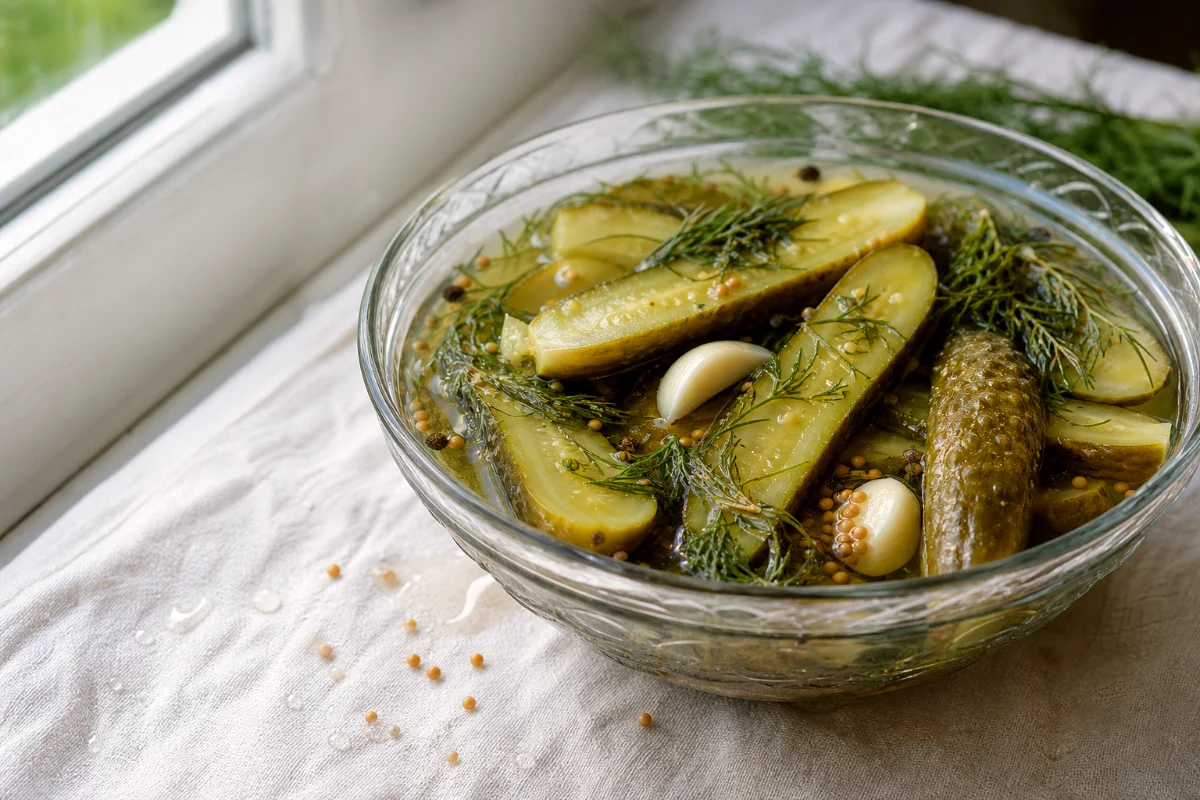
This sunny summer pickle is a classic Hungarian side for grilled meats, fried potatoes, stews, sandwiches, and simple cold plates. The flavor is bright, garlicky, lightly sour, and full of fresh dill.
Because this recipe ferments naturally, it is low in calories and made with real ingredients. It can also contain live beneficial bacteria when handled cleanly and stored cold after fermenting. It is still salty, so enjoy it as a side rather than a main dish.
Why You Will Love This Recipe
- Crisp and juicy texture: Cutting the ends of the cucumber and slitting the sides helps the brine season every bite.
- Classic kovászos flavor: Fresh dill, garlic, mustard seed, peppercorns, and sourdough bread create that unmistakable tang.
- Budget-friendly: Cucumbers are affordable in season, and the rest of the ingredients are pantry staples.
- Easy to scale: Fill the jar you have, then pour in enough brine to cover the cucumbers fully.
Fabian’s Budget and Health Tip: Buy small pickling cucumbers when they are in season and make extra brine at the same time. The leftover salted water costs very little, and you can use it to top up the jar each day as the water evaporates. This keeps the cucumbers covered, which helps the ferment stay clean, crisp, and safe.
Ingredients Serves 4
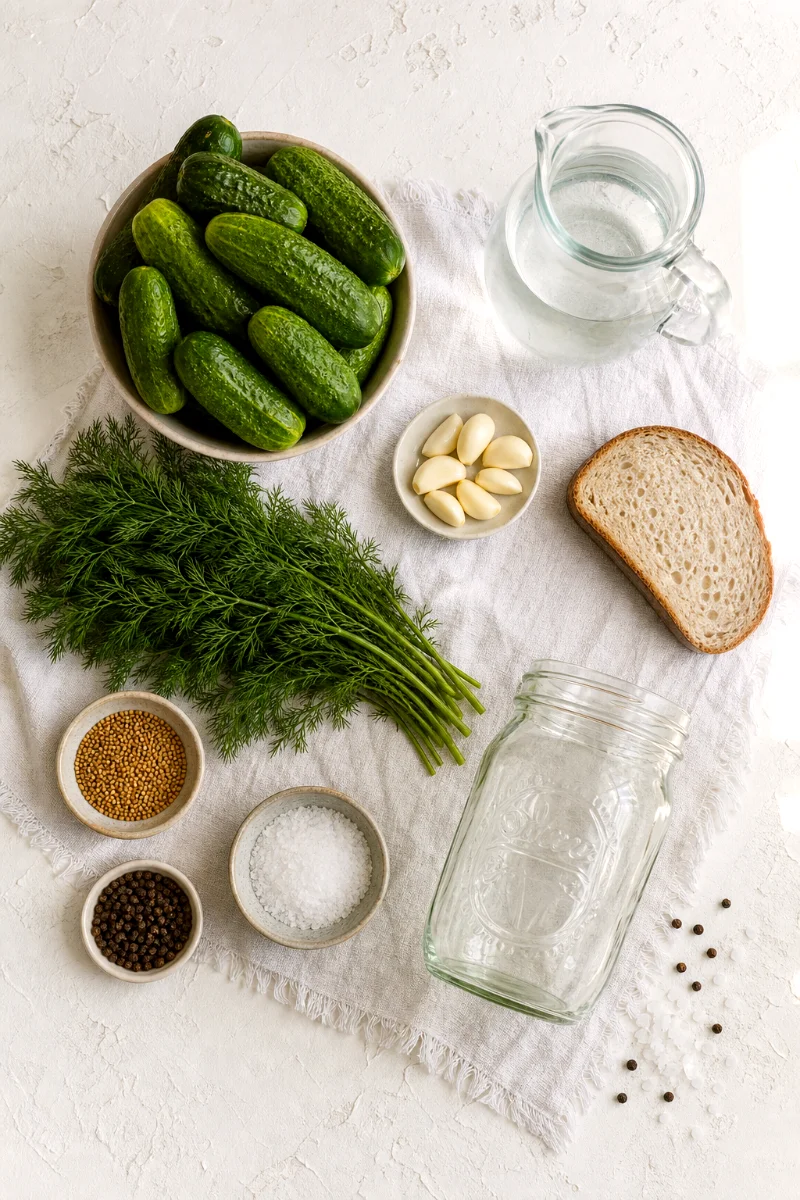
- 2 lb small pickling cucumbers (900 g)
- 6 cups water (1.4 L), plus extra if needed for topping up
- 1 1/2 tablespoons fine sea salt (27 g)
- 1 small bunch fresh dill (20 g)
- 2 teaspoons mustard seeds (6 g)
- 1 teaspoon whole black peppercorns (3 g)
- 4 garlic cloves, peeled and lightly crushed (20 g)
- 1 slice sourdough bread (40 g)
You will also need a very clean 1.5 quart glass jar (1.5 L) or a similar-size jar that holds the cucumbers snugly.
Step-by-Step Instructions
1. Make the Salt Brine
Stir the salt into the water until the water looks clear and no grains sit at the bottom. If you warm the water to dissolve the salt faster, let it cool to room temperature before using it. Warm brine can soften the cucumbers too quickly.
Make a little more brine than you think you need. During fermentation, the level can drop, and the cucumbers must stay fully covered.
2. Wash and Cut the Cucumbers
Rinse the cucumbers well under cool water. Rub away any grit, especially around the bumpy skin. Trim a thin slice from both ends of each cucumber.
Cut one or two long slits down the sides of each cucumber without slicing all the way through. The cucumbers should stay whole, but the brine should be able to move inside. This gives you a faster, more even tang.
3. Layer the Jar
Place some dill, mustard seeds, peppercorns, and garlic at the bottom of the jar. Pack in a layer of cucumbers, standing them upright if possible. Add more dill, seeds, peppercorns, and garlic between the layers.
Keep packing until the jar is full but not crushed. The jar should smell fresh, green, peppery, and garlicky before the brine even goes in.
4. Add the Brine and Bread
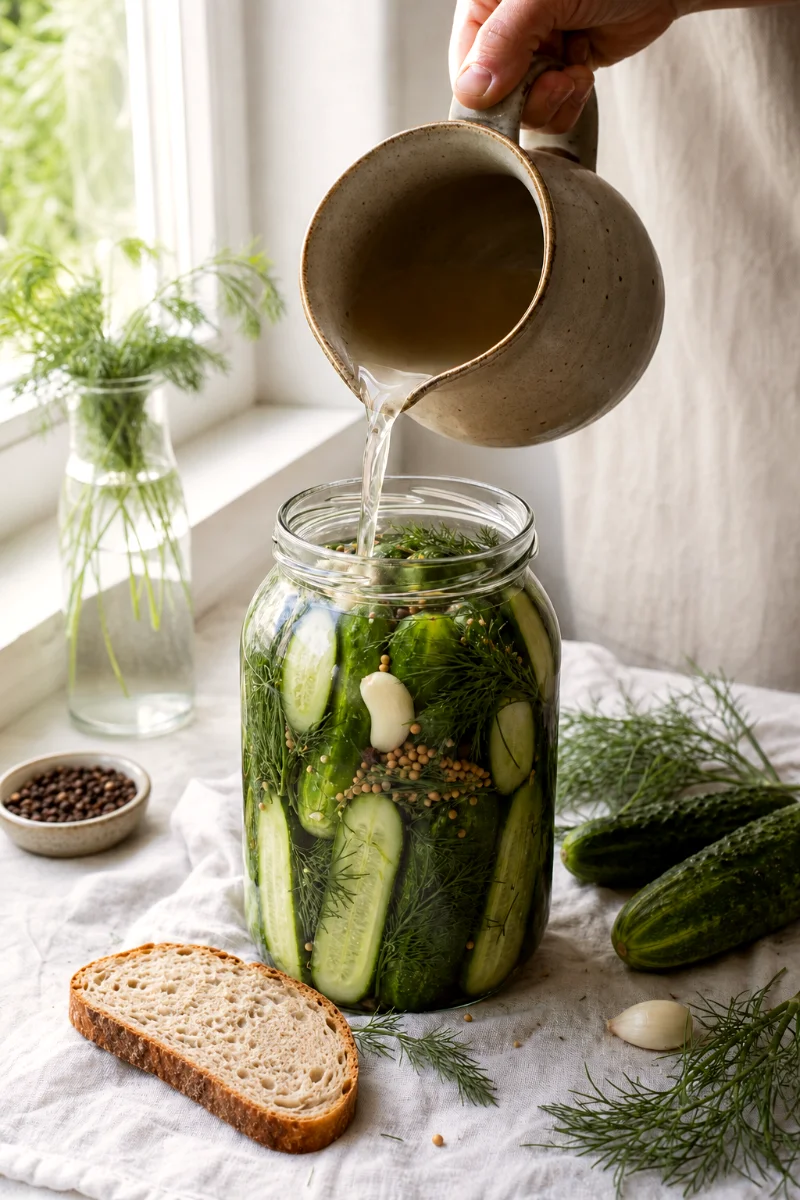
Pour the cooled salt brine over the cucumbers until they are completely covered. Tap the jar gently on the counter to release trapped air bubbles.
Place the slice of sourdough bread on top of the cucumbers. The bread helps start the classic kovászos flavor and gives the brine a gentle, fermented aroma.
5. Ferment in a Warm Sunny Spot
Cover the jar loosely with a small plate or clean lid. Do not seal it tightly during active fermentation. Set the jar in a warm, bright spot for 2 to 3 days.
Check the jar daily. You should see bubbles rising through the brine, and the cucumbers will shift from bright green to olive green. The smell should be tangy, savory, and dill scented, not rotten or harsh. Add extra brine as needed so every cucumber stays covered.
6. Chill and Store
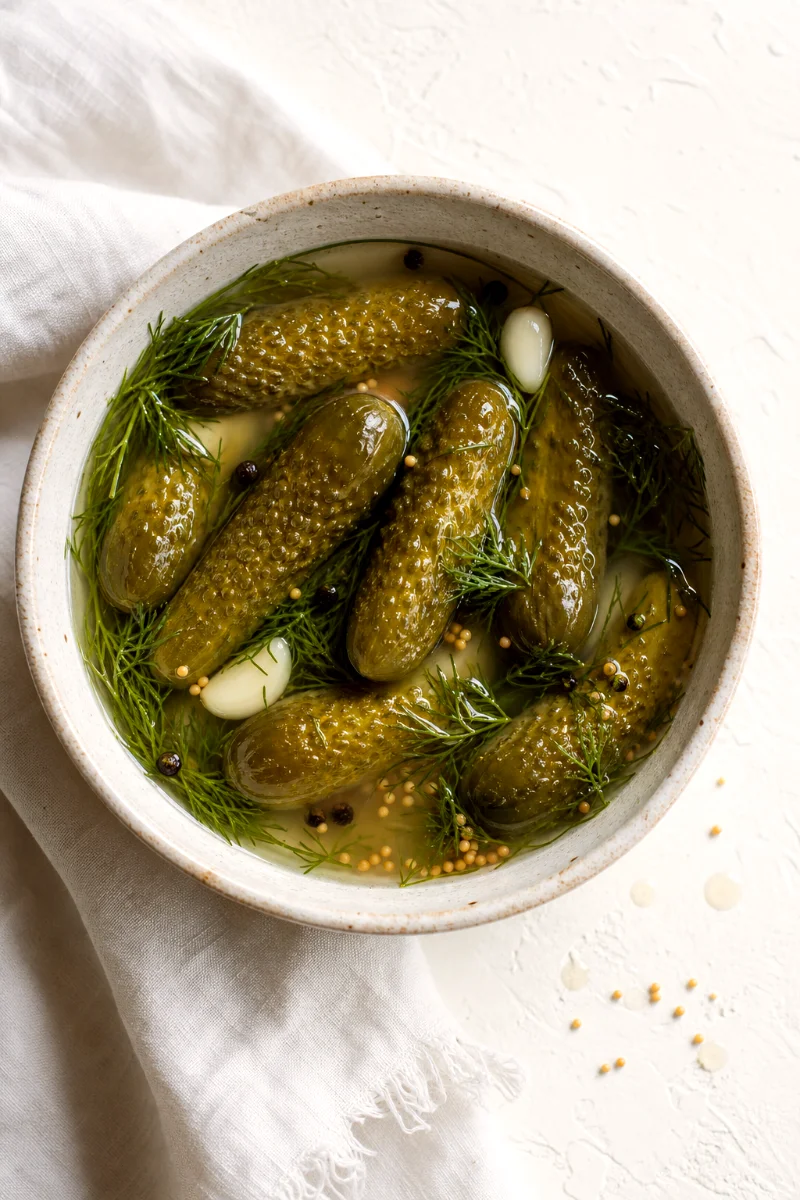
When the pickles taste pleasantly sour and the brine is lively with bubbles, remove the bread. Transfer the pickles and brine to a clean jar if needed, then cover and refrigerate.
The cold slows the fermentation and keeps the pickles crisp. They will keep for several weeks in the refrigerator, and the flavor will become deeper and sharper over time.
Expert Troubleshooting and FAQs
Why are my Hungarian fermented dill pickles soft?
Soft pickles usually come from cucumbers that were too old, brine that was too warm, or a jar that sat in a place that was too hot. Use small firm cucumbers, cool the brine fully, and ferment in warmth rather than harsh heat.
Do I have to use sourdough bread?
Sourdough bread gives the most traditional kovászos uborka flavor. A simple slice of crusty bread can also work, but sourdough adds a deeper tang. Remove the bread once the pickles are ready so it does not break down into the brine.
What if I see white film on top?
A thin white film can be kahm yeast, which sometimes appears during fermentation. Skim it away and make sure the cucumbers stay covered. If you see fuzzy mold, pink spots, black spots, or smell anything rotten, throw the batch away.
How sour should kovászos uborka taste?
It should taste salty, tangy, garlicky, and fresh, with a gentle sour bite. Taste one after 2 days. If it tastes too mild, give it another day and watch for more bubbles.
Can I make this without a sunny window?
Yes. A warm kitchen counter works well. Sun helps the traditional method, but steady warmth is more important. Aim for a spot that feels warm but not hot.
Estimated Nutritional Facts
These values are rough estimates per serving. The exact sodium level depends on how much brine the cucumbers absorb.
- Calories: 35
- Protein: 2 g
- Carbs: 8 g
- Fats: 0 g
- Sodium: High, varies by brine absorption
Hungarian Fermented Dill Pickles
Ingredients
- 2 lb small pickling cucumbers (900 g)
- 6 cups water (1.4 L), plus extra if needed for topping up
- 1 1/2 tablespoons fine sea salt (27 g)
- 1 small bunch fresh dill (20 g)
- 2 teaspoons mustard seeds (6 g)
- 1 teaspoon whole black peppercorns (3 g)
- 4 garlic cloves, peeled and lightly crushed (20 g)
- 1 slice sourdough bread (40 g)
Instructions
- 1. Make the Salt Brine. Stir the salt into the water until the water looks clear and no grains sit at the bottom. If you warm the water to dissolve the salt faster, let it cool to room temperature before using it. Warm brine can soften the cucumbers too quickly. Make a little more brine than you think you need. During fermentation, the level can drop, and the cucumbers must stay fully covered.
- 2. Wash and Cut the Cucumbers. Rinse the cucumbers well under cool water. Rub away any grit, especially around the bumpy skin. Trim a thin slice from both ends of each cucumber. Cut one or two long slits down the sides of each cucumber without slicing all the way through. The cucumbers should stay whole, but the brine should be able to move inside. This gives you a faster, more even tang.
- 3. Layer the Jar. Place some dill, mustard seeds, peppercorns, and garlic at the bottom of the jar. Pack in a layer of cucumbers, standing them upright if possible. Add more dill, seeds, peppercorns, and garlic between the layers. Keep packing until the jar is full but not crushed. The jar should smell fresh, green, peppery, and garlicky before the brine even goes in.
- 4. Add the Brine and Bread. Pour the cooled salt brine over the cucumbers until they are completely covered. Tap the jar gently on the counter to release trapped air bubbles. Place the slice of sourdough bread on top of the cucumbers. The bread helps start the classic kovászos flavor and gives the brine a gentle, fermented aroma.
- 5. Ferment in a Warm Sunny Spot. Cover the jar loosely with a small plate or clean lid. Do not seal it tightly during active fermentation. Set the jar in a warm, bright spot for 2 to 3 days. Check the jar daily. You should see bubbles rising through the brine, and the cucumbers will shift from bright green to olive green. The smell should be tangy, savory, and dill scented, not rotten or harsh. Add extra brine as needed so every cucumber stays covered.
- 6. Chill and Store. When the pickles taste pleasantly sour and the brine is lively with bubbles, remove the bread. Transfer the pickles and brine to a clean jar if needed, then cover and refrigerate. The cold slows the fermentation and keeps the pickles crisp. They will keep for several weeks in the refrigerator, and the flavor will become deeper and sharper over time.