Crispy Olive Oil & Rosemary Flatbread (Easy 6-Ingredient Recipe)

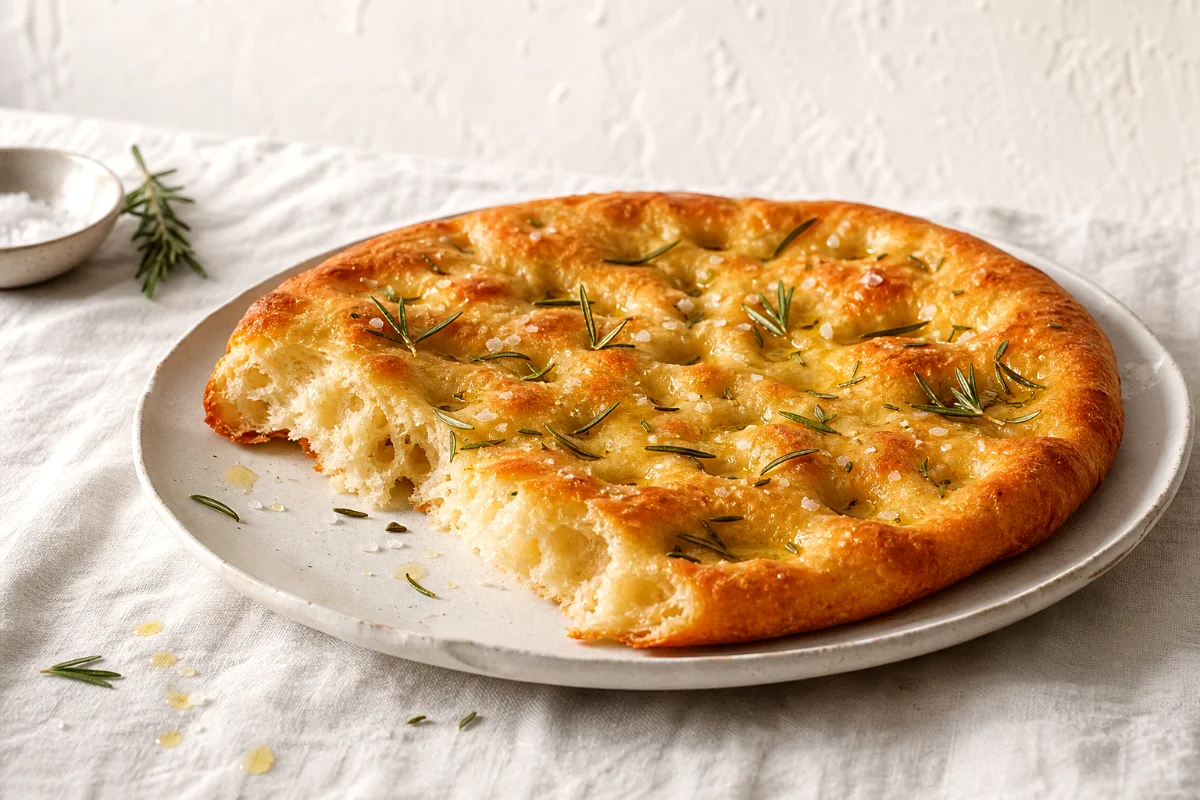
Six cheap pantry staples turn into a golden, crackly olive oil rosemary flatbread that tastes like it came from a Mediterranean bakery. Flour, water, yeast, and a glug of good olive oil do almost all the work, so you spend cents per serving instead of the small fortune a bakery loaf costs.
Olive oil brings heart-healthy monounsaturated fats, fresh rosemary adds antioxidants and a piney punch, and the simple flour base keeps it filling without anything processed. It is the kind of recipe that proves eating well and spending little can live on the same plate.
Why You’ll Love This Recipe
- It is dirt cheap. Everything starts in your pantry, so one fragrant flatbread costs a fraction of a bakery price.
- It is almost hands-off. You mix, knead for six minutes, then let time and yeast do the heavy lifting.
- It is healthier than store-bought. No preservatives, no mystery oils, just olive oil and real rosemary.
- It is endlessly flexible. Dip it, top it, or tear it warm straight off the tray.
Fabian’s Budget & Health Tip
Buy rosemary as a small live plant instead of those pricey plastic clamshells. One plant costs about the same as a single packet, lives on your windowsill for months, and gives you free fresh herbs every time you cook. For an even leaner loaf, swap half the all-purpose flour for whole wheat. You get extra fiber and a nuttier flavor for zero added cost.
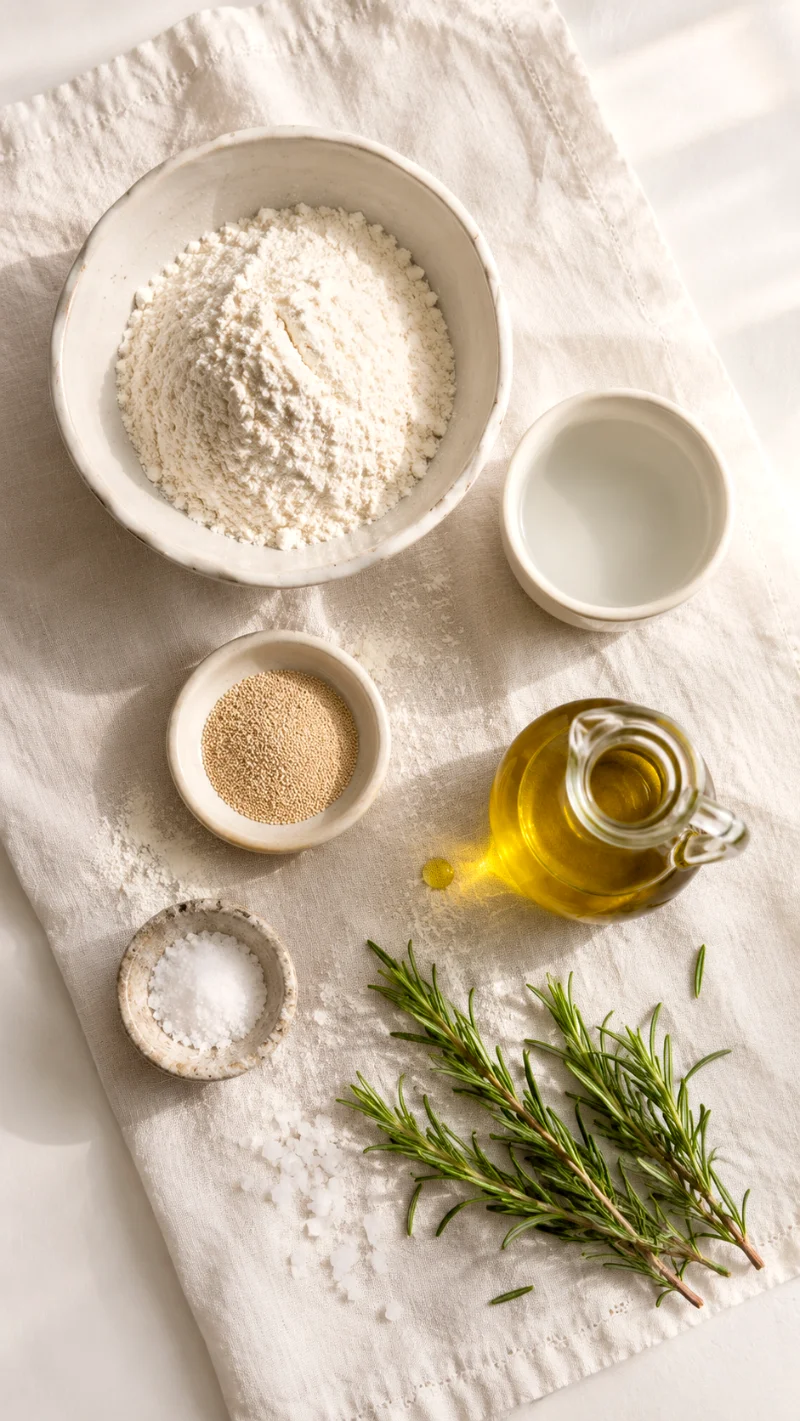
Ingredients (Serves 2)
- 1 and 1/4 cups all-purpose flour (155 g)
- 1/2 cup warm water (120 ml)
- 1/2 tsp active dry yeast (2 g)
- 1/2 tsp fine salt (3 g)
- 2 tbsp olive oil (30 ml), divided
- 1 tbsp fresh rosemary, roughly chopped (about 2 small sprigs)
- Flaky sea salt, for topping
Step-by-Step Instructions
Step 1: Wake Up the Yeast 🥣
Pour the warm water into a large bowl. The water should feel like a comfortable bath, warm but never hot. Sprinkle the yeast over the top and let it sit for five minutes. Watch for a light, foamy bloom across the surface. That bubbly cap tells you the yeast is alive and ready to work.
Step 2: Mix the Dough 🌾
Add the flour, fine salt, and 1 tablespoon of the olive oil to the bowl. Stir with a spoon until the flour disappears and a shaggy, sticky dough pulls together. It will look rough and lumpy at this stage, and that is exactly right.
Step 3: Knead Until Smooth 👐
Tip the dough onto a lightly floured counter. Knead for six minutes, pushing it away with the heel of your hand and folding it back. Feel it transform under your palms from sticky and craggy into a soft, springy, satin-smooth ball. When you poke it and it slowly springs back, you are done.
Step 4: Let It Rise ⏳
Place the dough in a clean, lightly oiled bowl and cover it with a damp cloth. Set it somewhere warm for one hour. It is ready when it has doubled in size and looks puffy and pillowy, with a soft dome that wobbles when you nudge the bowl.
Step 5: Press Into the Tray 🫒
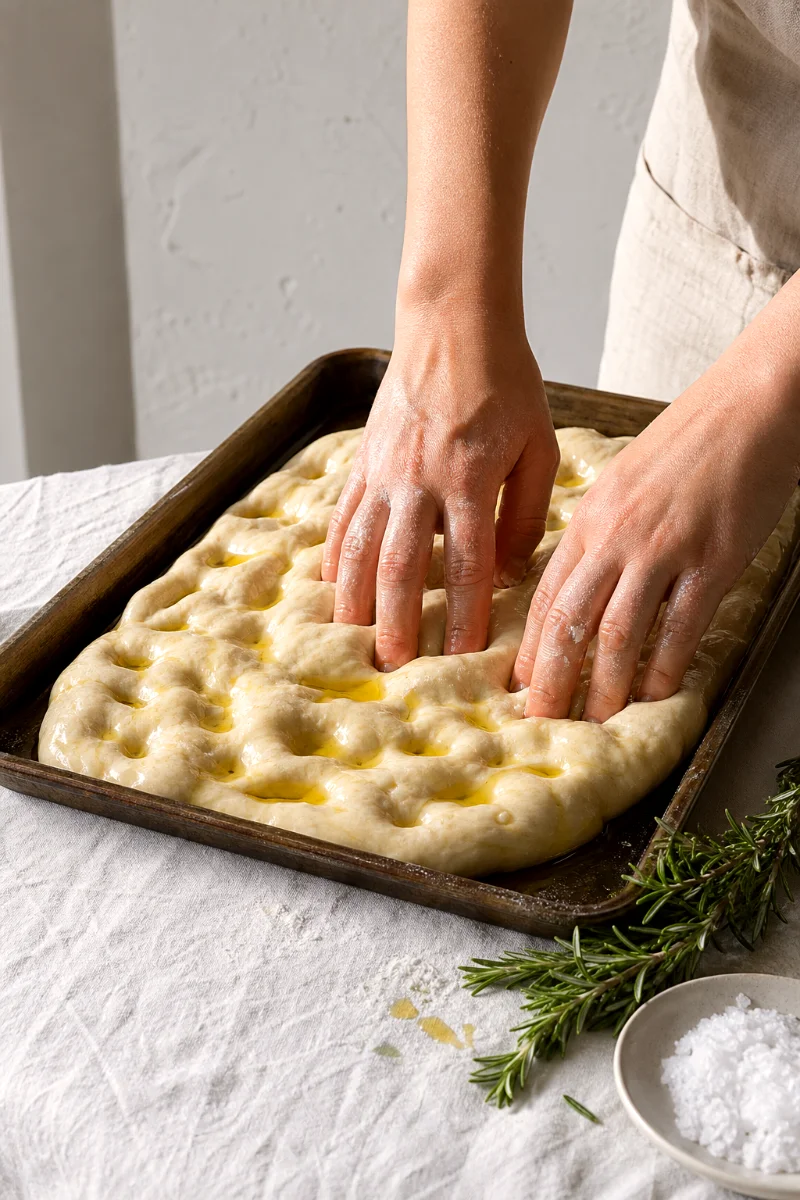
Drizzle a small baking tray with a little olive oil and rub it across the surface. Tip the dough onto the tray and press it outward with your fingertips, stretching it into a rough rectangle about half an inch thick. Dimple the surface all over with your fingers so it looks like a landscape of little craters. Those dimples will catch pools of oil and bake into golden crispy edges.
Step 6: Top and Bake 🔥
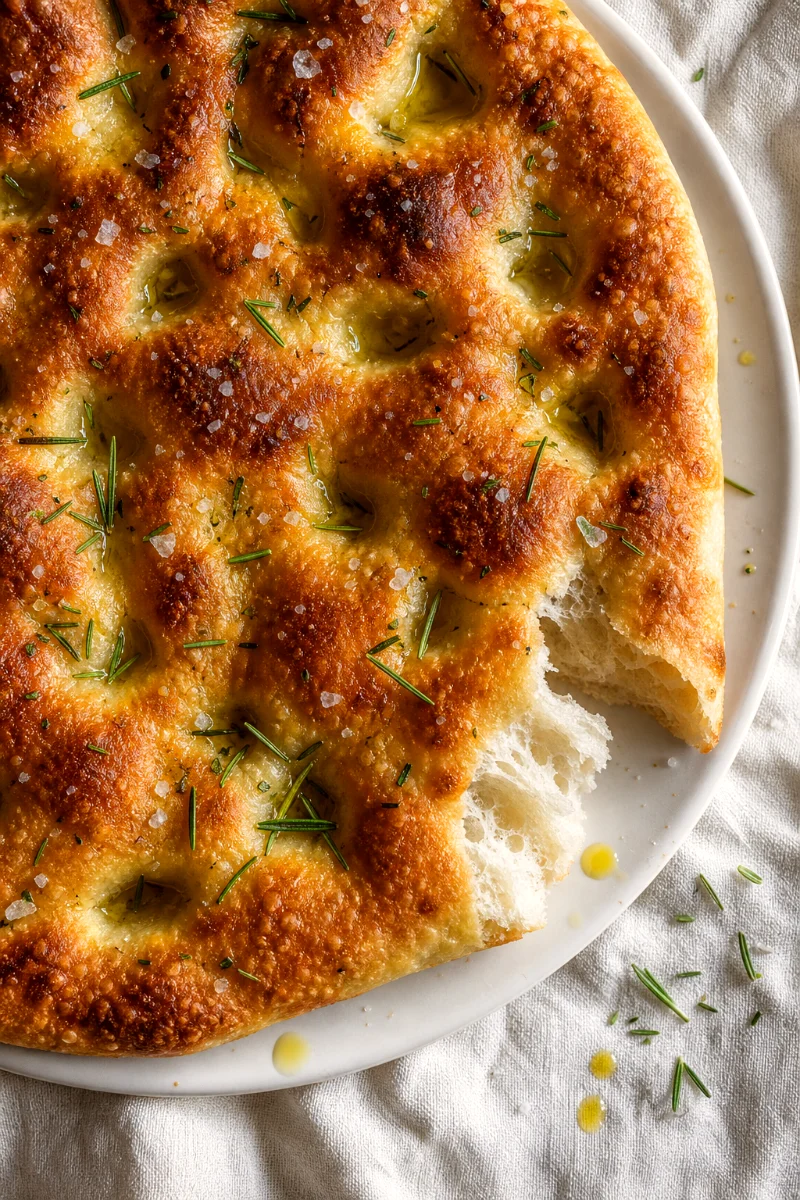
Drizzle the remaining olive oil over the dough so it settles into the dimples and shines. Scatter the chopped rosemary across the top, then finish with a pinch of flaky sea salt. Bake at 425°F (220°C) for 18 to 22 minutes. Pull it out when the top is deep golden, the edges are crackly and crisp, and your kitchen smells like warm bread and toasted rosemary. Let it cool for five minutes, then tear in while it is still warm.
Expert Troubleshooting & FAQs
Why didn’t my dough rise?
The usual culprit is water temperature. If it is too hot it kills the yeast, and if it is too cold, the yeast stays asleep. Aim for warm bathwater temperature. Also check that your yeast is fresh, since expired yeast will not bloom no matter how perfect the water is.
My flatbread came out dense and tough. What happened?
You likely added too much flour or skipped enough kneading. A slightly sticky dough is a good thing, so resist the urge to keep dusting in flour. Knead the full six minutes to build the stretch that gives flatbread its airy chew.
Can I make this without a stand mixer?
Absolutely. This recipe is built for hands and a bowl. The six-minute knead is short and satisfying, and working the dough by hand lets you feel exactly when it turns smooth and ready.
Estimated Nutritional Facts
Per serving (recipe makes 2 servings):
- Calories: 415
- Protein: 9 g
- Carbs: 60 g
- Fats: 15 g
Values are rough estimates and will vary with flour brand and exact oil amounts.
Crispy Olive Oil & Rosemary Flatbread (Easy 6-Ingredient Recipe)
Ingredients
- 1 and 1/4 cups all-purpose flour (155 g)
- 1/2 cup warm water (120 ml)
- 1/2 tsp active dry yeast (2 g)
- 1/2 tsp fine salt (3 g)
- 2 tbsp olive oil (30 ml), divided
- 1 tbsp fresh rosemary, roughly chopped (about 2 small sprigs)
- Flaky sea salt, for topping
Instructions
- Step 1: Wake Up the Yeast. Pour the warm water into a large bowl. The water should feel like a comfortable bath, warm but never hot. Sprinkle the yeast over the top and let it sit for five minutes. Watch for a light, foamy bloom across the surface. That bubbly cap tells you the yeast is alive and ready to work.
- Step 2: Mix the Dough. Add the flour, fine salt, and 1 tablespoon of the olive oil to the bowl. Stir with a spoon until the flour disappears and a shaggy, sticky dough pulls together. It will look rough and lumpy at this stage, and that is exactly right.
- Step 3: Knead Until Smooth. Tip the dough onto a lightly floured counter. Knead for six minutes, pushing it away with the heel of your hand and folding it back. Feel it transform under your palms from sticky and craggy into a soft, springy, satin-smooth ball. When you poke it and it slowly springs back, you are done.
- Step 4: Let It Rise. Place the dough in a clean, lightly oiled bowl and cover it with a damp cloth. Set it somewhere warm for one hour. It is ready when it has doubled in size and looks puffy and pillowy, with a soft dome that wobbles when you nudge the bowl.
- Step 5: Press Into the Tray. Drizzle a small baking tray with a little olive oil and rub it across the surface. Tip the dough onto the tray and press it outward with your fingertips, stretching it into a rough rectangle about half an inch thick. Dimple the surface all over with your fingers so it looks like a landscape of little craters. Those dimples will catch pools of oil and bake into golden crispy edges.
- Step 6: Top and Bake. Drizzle the remaining olive oil over the dough so it settles into the dimples and shines. Scatter the chopped rosemary across the top, then finish with a pinch of flaky sea salt. Bake at 425°F (220°C) for 18 to 22 minutes. Pull it out when the top is deep golden, the edges are crackly and crisp, and your kitchen smells like warm bread and toasted rosemary. Let it cool for five minutes, then tear in while it is still warm.