Quick Summer Cabbage Kimchi (Ready in 2 Days)

Skip the expensive store-bought jars and make your own quick cabbage kimchi at home with one humble green cabbage and a handful of pantry staples. This is the fast-track version of a Korean classic, built for hot summer days when you want bold, tangy flavor without weeks of waiting.

Green cabbage is one of the cheapest vegetables at any market, which makes this recipe a winner for your wallet. It is also loaded with fiber, vitamin C, and vitamin K, and once it ferments, it delivers gut-friendly probiotics that support healthy digestion. You get a crunchy, spicy, addictive side dish for the price of a few coins per serving.
Why You’ll Love This Recipe
- Wallet-friendly: A single green cabbage costs next to nothing and stretches across many meals.
- Fast fermentation: No three-week wait. This version is ready to eat in just 1 to 2 days.
- Gut-loving and light: Naturally low in calories and rich in probiotics, fiber, and vitamins.
- Beginner-proof: Just salt, mix, and jar. No special equipment and no fuss.
Fabian’s Budget & Health Tip: Do not toss the cabbage core or the outer leaves. Slice the core thinly and ferment it right alongside the leaves for extra crunch and zero waste. Want to cut the sodium? Swap half the table salt for a coarse sea salt, which spreads further per gram, and rinse the cabbage one extra time before mixing.
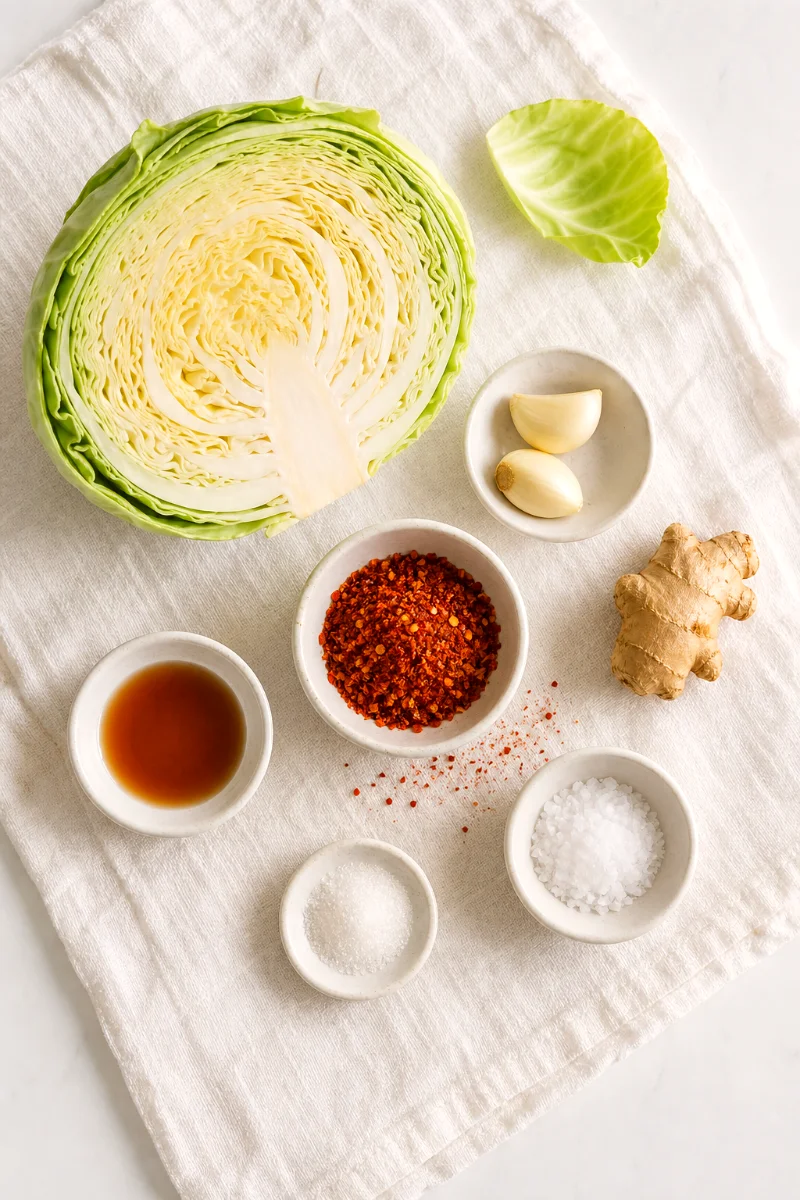
Ingredients (Serves 2)
- 1/2 medium green cabbage, about 1 lb (450 g), chopped into bite-sized pieces
- 1.5 tablespoons (25 g) salt, for salting the cabbage
- 2 cloves garlic, finely grated
- 1 teaspoon (5 g) fresh ginger, finely grated
- 1 to 2 tablespoons (8 to 16 g) chili flakes, to taste
- 1 tablespoon (15 ml) fish sauce
- 1 teaspoon (4 g) sugar
Step-by-Step Instructions
Salt the Cabbage
🧂 Pile your chopped cabbage into a large bowl and scatter the salt over every layer. Toss it with your hands until each piece glistens. Press down firmly. Within minutes you will see beads of water rising to the surface as the salt pulls moisture out. Let it sit for 1 hour. The cabbage should look wilted and feel bendy, not stiff, when you are done.
Rinse and Drain
💧 Tip the cabbage into a colander and rinse it under cold running water two or three times. Taste a piece. It should be pleasantly salty, not mouth-puckering. Squeeze out the excess water with your hands so the cabbage feels damp but not dripping. Set it aside.
Mix the Spicy Paste
🌶️ In a small bowl, stir together the grated garlic, ginger, chili flakes, fish sauce, and sugar. The paste will turn a deep, glossy red and smell sharp and savory, like garlic hitting a hot pan. Give it a quick stir until the sugar dissolves into the mix.
Coat the Cabbage
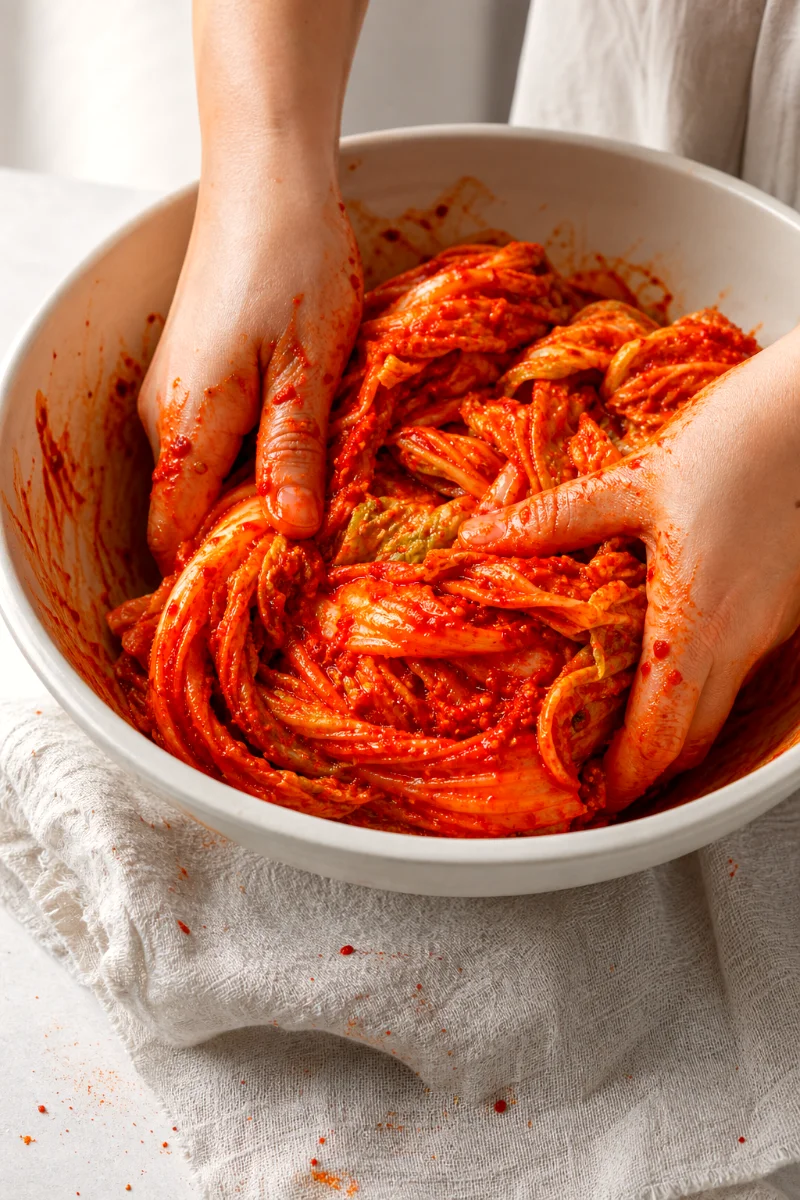
🥬 Pour the paste over the drained cabbage. Now get your hands in there and massage it through every crevice until the leaves turn an even, fiery red. You will hear a soft squelch as the paste works in. Keep going until there are no pale patches left.
Jar It Up
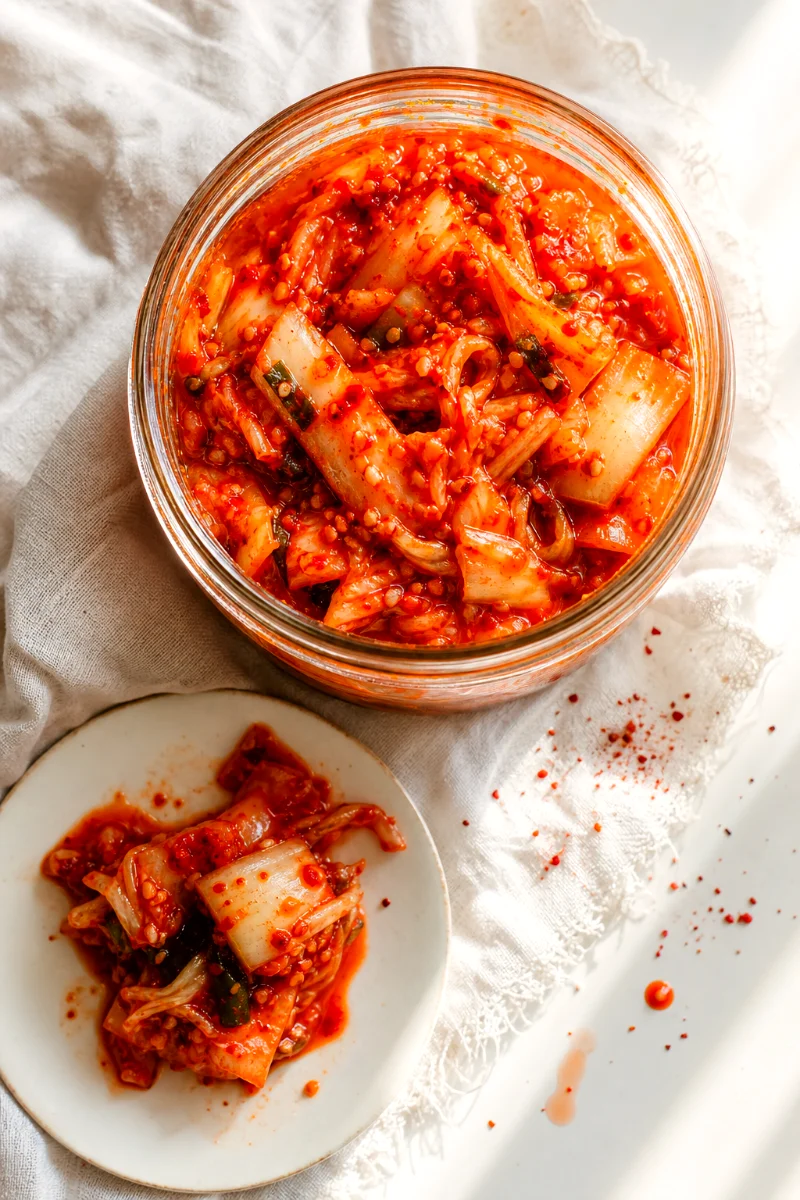
🫙 Pack the cabbage tightly into a clean jar, pressing down hard with a spoon so the liquid rises above the leaves. Leave about an inch of space at the top. Seal the lid loosely so gases can escape as it ferments.
Ferment and Taste
⏳ Leave the jar on your counter at room temperature for 1 to 2 days, out of direct sunlight. You will spot tiny bubbles forming and catch a tangy, sour aroma when you open it. That is the fermentation working. Once it tastes sharp and zingy to your liking, move it to the fridge to slow things down.
Expert Troubleshooting & FAQs
Why isn’t my kimchi bubbling or getting sour?
Your kitchen is probably too cool. Fermentation slows right down below 65°F (18°C). Move the jar somewhere warmer, like near a sunny windowsill but out of direct light, and give it another day. Warmth is the engine here.
Can I make this without fish sauce?
Yes. Swap the fish sauce for an equal amount of soy sauce or a splash of miso paste thinned with water. This keeps it fully vegetarian while still delivering that deep, savory umami backbone.
My kimchi is too salty. What went wrong?
You likely did not rinse enough. Salting draws out water, but the rinse is what controls the final saltiness. Next time, rinse two or three times and always taste a piece before mixing in the paste. For this batch, serve it with plain rice to balance things out.
Estimated Nutritional Facts (Per Serving)
- Calories: 70 kcal
- Protein: 3 g
- Carbs: 14 g
- Fats: 0.5 g
These are rough estimates and will vary based on how much brine you include and the exact amount of chili and sugar you use.