Burnt Basque Cheesecake

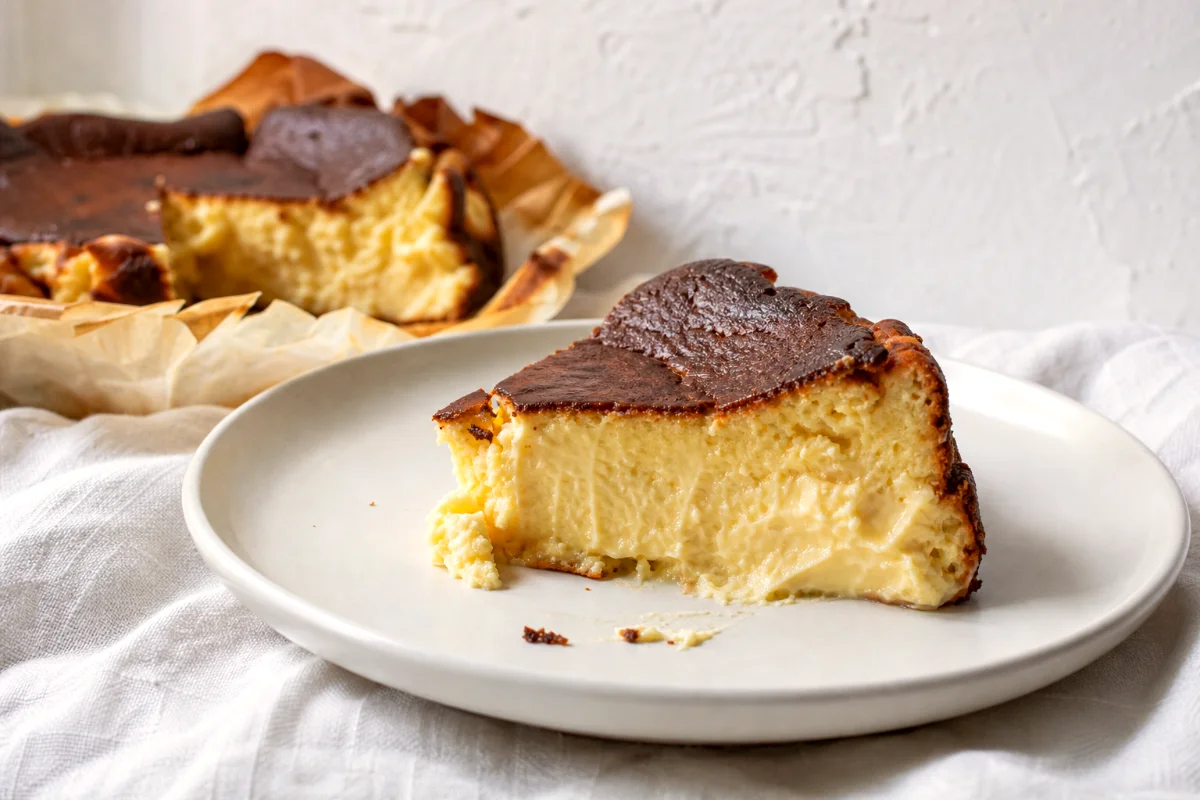
Burnt Basque Cheesecake turns cream cheese, eggs, sugar, and cream into a rich, caramel-topped dessert with almost no fuss.
This is the kind of from-scratch treat that looks impressive but stays simple. You do not need a water bath. You do not need a crust. You just mix, strain, bake hot, chill, and slice.
The high oven heat gives the cheesecake its deep brown top. The center stays soft, creamy, and custard-like. It tastes sweet, tangy, and slightly toasted, with a texture that feels smooth and rich.
Why You Will Love This Recipe
- Simple ingredients: You only need cream cheese, sugar, eggs, vanilla, salt, heavy cream, and flour.
- No crust needed: The rustic parchment edges make the cheesecake look beautiful with less work.
- Bold flavor: The dark top adds a toasted caramel taste that balances the creamy filling.
- Great make-ahead dessert: It needs chilling time, so you can bake it earlier in the day.
Fabian’s Budget Tip: Use store-brand block cream cheese instead of whipped cream cheese. It costs less, gives better structure, and blends into a smoother batter. Vanilla essence also works well here, so you do not need expensive vanilla extract for a great result.
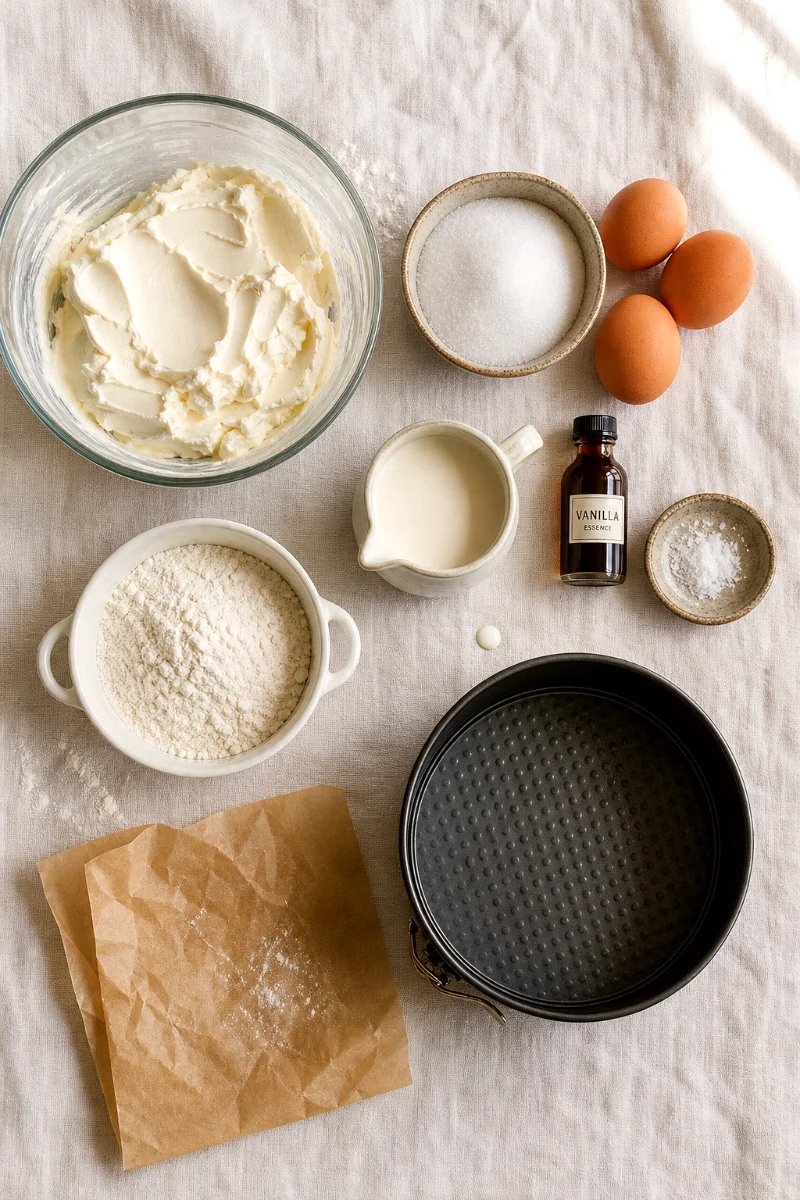
Ingredients Serves 4
- 1 ¾ cups cream cheese (400 g), softened
- ½ cup granulated sugar (100 g)
- 3 large eggs (about 150 g without shells), room temperature if possible
- 1 tsp vanilla essence (5 ml)
- ¼ tsp fine salt (2 g)
- 1 ¼ cups heavy cream (290 g)
- 2 ½ tbsp all-purpose flour (20 g)
Step-by-Step Instructions
1. Prepare the Pan
Place a 6-inch round springform pan on a flat surface. Line the bottom and sides with parchment paper. Let some parchment rise above the rim, so you can lift the cheesecake out after chilling.
Press the paper into the corners, but do not worry about making it perfect. The folds help create the classic rustic sides of a Burnt Basque Cheesecake.
2. Beat the Cream Cheese and Sugar
Add the softened cream cheese and sugar to a mixing bowl. Beat with an electric mixer for about 2 minutes, until the mixture looks smooth, thick, and creamy.
Scrape the bowl as needed. You should not see large white lumps of cream cheese. A smooth base gives the finished cheesecake its silky center.
3. Add the Eggs
Crack in the eggs. Beat again until the batter looks glossy and the eggs disappear into the cream cheese mixture.
The batter will loosen as the eggs mix in. Stop once it looks even, so you do not whip in too much air.
4. Add Vanilla, Salt, and Heavy Cream
Add the vanilla essence and salt. Pour in the heavy cream. Beat until the batter looks smooth and pourable.
At this point, the mixture should smell sweet and creamy, with a light vanilla aroma. The salt will not make it taste salty. It helps the caramelized top and tangy cheese flavor stand out.
5. Sift in the Flour
Place a sieve over the bowl. Add the all purpose flour and sift it into the batter. Beat on low speed just until combined.
Do not overmix after adding the flour. Stop as soon as the batter looks smooth and no dry flour remains.
6. Strain the Batter into the Pan
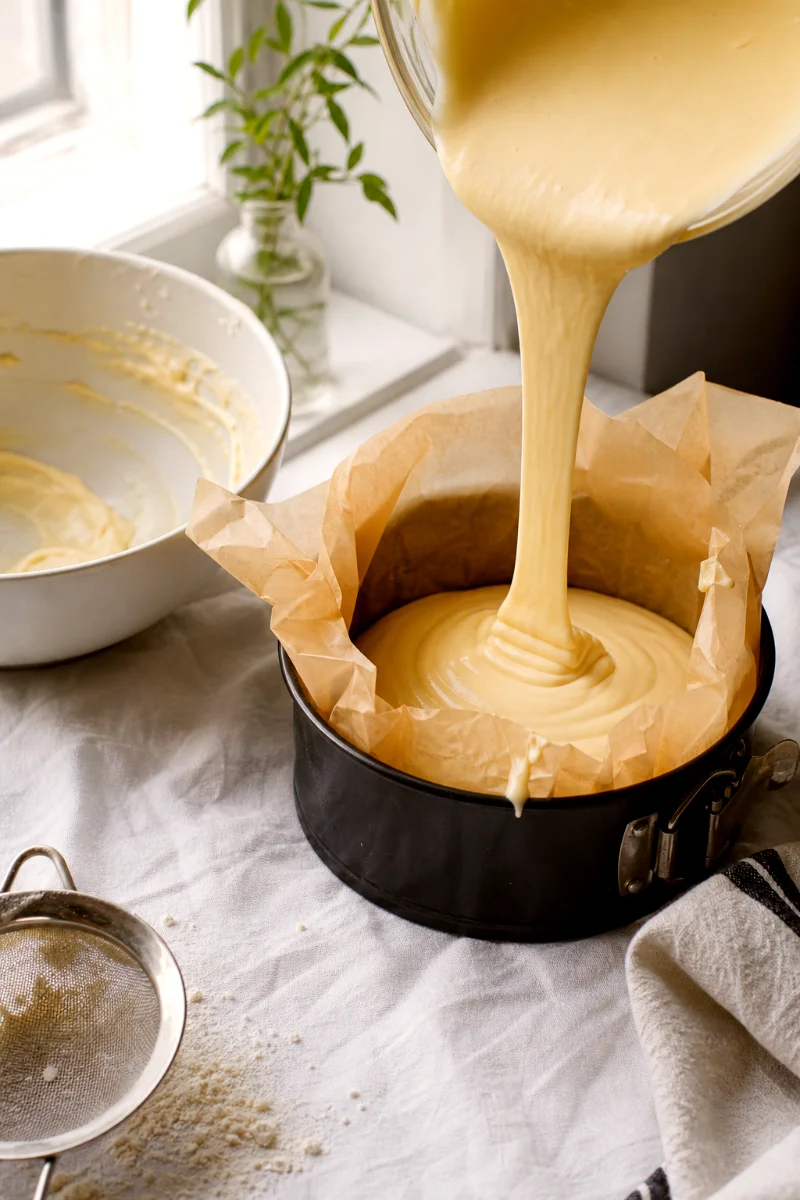
Pour the batter through a sieve into the lined springform pan. This small step catches any tiny lumps and gives the cheesecake a cleaner, creamier texture.
Tap the pan gently on the counter once or twice. You may see a few bubbles rise to the top. That is normal.
7. Bake Hot Until Deep Brown
Preheat the oven to 450°F (230°C). Use top and bottom heat without a fan for the most even bake.
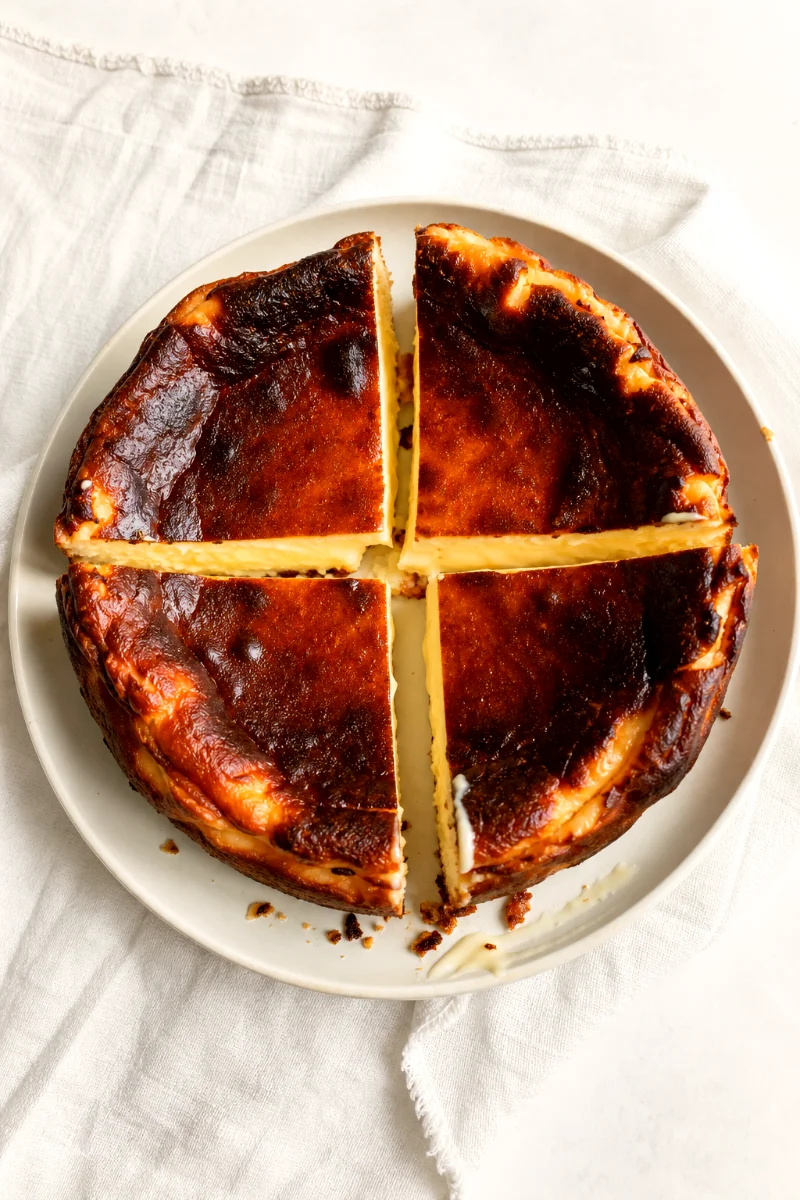
Bake the cheesecake for 25 to 30 minutes. The top should turn deeply browned, with darker spots across the surface. The edges should look set, while the center still jiggles when you gently move the pan.
Your kitchen should smell like toasted sugar and warm vanilla. If the top is pale after 25 minutes, bake a few minutes longer. If it smells sharp or smoky, remove it sooner.
8. Cool and Chill
Take the cheesecake out of the oven and place the pan on a wire rack. Let it cool completely to room temperature.
The center will sink slightly as it cools. That is exactly what you want. Once cool, transfer the cheesecake to the refrigerator and chill for 2 to 4 hours.
9. Lift, Slice, and Serve
Use the overhanging parchment paper to lift the cheesecake out of the pan. Peel the parchment gently away from the sides.
Slice with a sharp knife. For cleaner slices, wipe the knife between cuts. Serve chilled for a firmer bite or let slices sit at room temperature for 10 minutes for a softer, creamier texture.
Expert Troubleshooting and FAQs
Why is my Burnt Basque Cheesecake still jiggly in the center?
A jiggly center is normal. The cheesecake keeps setting as it cools and chills. If the edges are set and the top is deeply browned, it is ready to come out.
Why did my cheesecake crack?
Cracks are common with this style of cheesecake. The high heat, puffed top, and cooling process create a rustic look. It will still taste rich and creamy.
Can I use a regular cake pan instead of a springform pan?
Yes, but line it very well with parchment paper and leave a generous overhang. A springform pan makes lifting easier, but parchment can help you remove it from a regular deep cake pan.
Can I skip straining the batter?
You can, but straining makes a big difference. It removes tiny lumps of cream cheese or flour and helps create a smoother cheesecake.
How do I store leftovers?
Store leftover cheesecake in an airtight container in the refrigerator for up to 3 days. Keep it chilled, then let each slice sit for a few minutes before serving if you want a softer texture.
Estimated Nutritional Facts
These numbers are rough estimates per serving and may change based on the brands you use.
- Calories: 760
- Protein: 13 g
- Carbs: 39 g
- Fats: 65 g
Burnt Basque Cheesecake
Ingredients
- 1 ¾ cups cream cheese (400 g), softened
- ½ cup granulated sugar (100 g)
- 3 large eggs (about 150 g without shells), room temperature if possible
- 1 tsp vanilla essence (5 ml)
- ¼ tsp fine salt (2 g)
- 1 ¼ cups heavy cream (290 g)
- 2 ½ tbsp all-purpose flour (20 g)
Instructions
- 1. Prepare the Pan. Place a 6-inch round springform pan on a flat surface. Line the bottom and sides with parchment paper. Let some parchment rise above the rim, so you can lift the cheesecake out after chilling. Press the paper into the corners, but do not worry about making it perfect. The folds help create the classic rustic sides of a Burnt Basque Cheesecake.
- 2. Beat the Cream Cheese and Sugar. Add the softened cream cheese and sugar to a mixing bowl. Beat with an electric mixer for about 2 minutes, until the mixture looks smooth, thick, and creamy. Scrape the bowl as needed. You should not see large white lumps of cream cheese. A smooth base gives the finished cheesecake its silky center.
- 3. Add the Eggs. Crack in the eggs. Beat again until the batter looks glossy and the eggs disappear into the cream cheese mixture. The batter will loosen as the eggs mix in. Stop once it looks even, so you do not whip in too much air.
- 4. Add Vanilla, Salt, and Heavy Cream. Add the vanilla essence and salt. Pour in the heavy cream. Beat until the batter looks smooth and pourable. At this point, the mixture should smell sweet and creamy, with a light vanilla aroma. The salt will not make it taste salty. It helps the caramelized top and tangy cheese flavor stand out.
- 5. Sift in the Flour. Place a sieve over the bowl. Add the all purpose flour and sift it into the batter. Beat on low speed just until combined. Do not overmix after adding the flour. Stop as soon as the batter looks smooth and no dry flour remains.
- 6. Strain the Batter into the Pan. Pour the batter through a sieve into the lined springform pan. This small step catches any tiny lumps and gives the cheesecake a cleaner, creamier texture. Tap the pan gently on the counter once or twice. You may see a few bubbles rise to the top. That is normal.
- 7. Bake Hot Until Deep Brown. Preheat the oven to 450°F (230°C). Use top and bottom heat without a fan for the most even bake. Bake the cheesecake for 25 to 30 minutes. The top should turn deeply browned, with darker spots across the surface. The edges should look set, while the center still jiggles when you gently move the pan. Your kitchen should smell like toasted sugar and warm vanilla. If the top is pale after 25 minutes, bake a few minutes longer. If it smells sharp or smoky, remove it sooner.
- 8. Cool and Chill. Take the cheesecake out of the oven and place the pan on a wire rack. Let it cool completely to room temperature. The center will sink slightly as it cools. That is exactly what you want. Once cool, transfer the cheesecake to the refrigerator and chill for 2 to 4 hours.
- 9. Lift, Slice, and Serve. Use the overhanging parchment paper to lift the cheesecake out of the pan. Peel the parchment gently away from the sides. Slice with a sharp knife. For cleaner slices, wipe the knife between cuts. Serve chilled for a firmer bite or let slices sit at room temperature for 10 minutes for a softer, creamier texture.